
12 Proven Ways to Increase Tips at Open Mic Nights in 2026
To increase tips at open mic nights, combine digital payment solutions with strategic performance timing and audience engagement techniques that eliminate cash-only barriers.
- QR code tipping systems capture 3-5x more revenue than cash-only methods by enabling instant digital payments
- Peak tipping moments occur immediately after your final song and during post-performance mingling
- Visible tip prompts and brief verbal calls-to-action boost conversion rates without appearing desperate
Most open mic performers walk away with pocket change. Some leave with serious income.
The difference isn't always talent, it's strategy, and knowing exactly how to increase tips at open mic nights transforms your side gig into reliable revenue. While venues take door fees and bar tabs, your tip jar (or lack thereof) directly reflects your ability to connect with audiences and remove friction from the payment process.
This guide reveals what separates hobbyists from professionals: mastering why traditional tipping methods fail performers, leveraging Kiosque QR's contactless payment technology designed specifically for live artists, sharpening stage presence tactics that make audiences eager to contribute, perfecting the psychology of tip requests without awkward begging, and uncovering insider secrets top earners use to triple their nightly take-home.
By implementing these 12 methods, you'll stop leaving money on the table and start treating open mics like the income opportunity they actually are.
Why most open mic performers leave money on the table
You've just delivered a killer set. The applause is genuine.
Yet when you check your tip jar later, there's barely enough for gas money. Sound familiar?
The problem isn't your performance, it's how you're collecting those tips. Most open mic performers unknowingly create friction that prevents audience members from showing appreciation, leaving hundreds of dollars unclaimed every month.
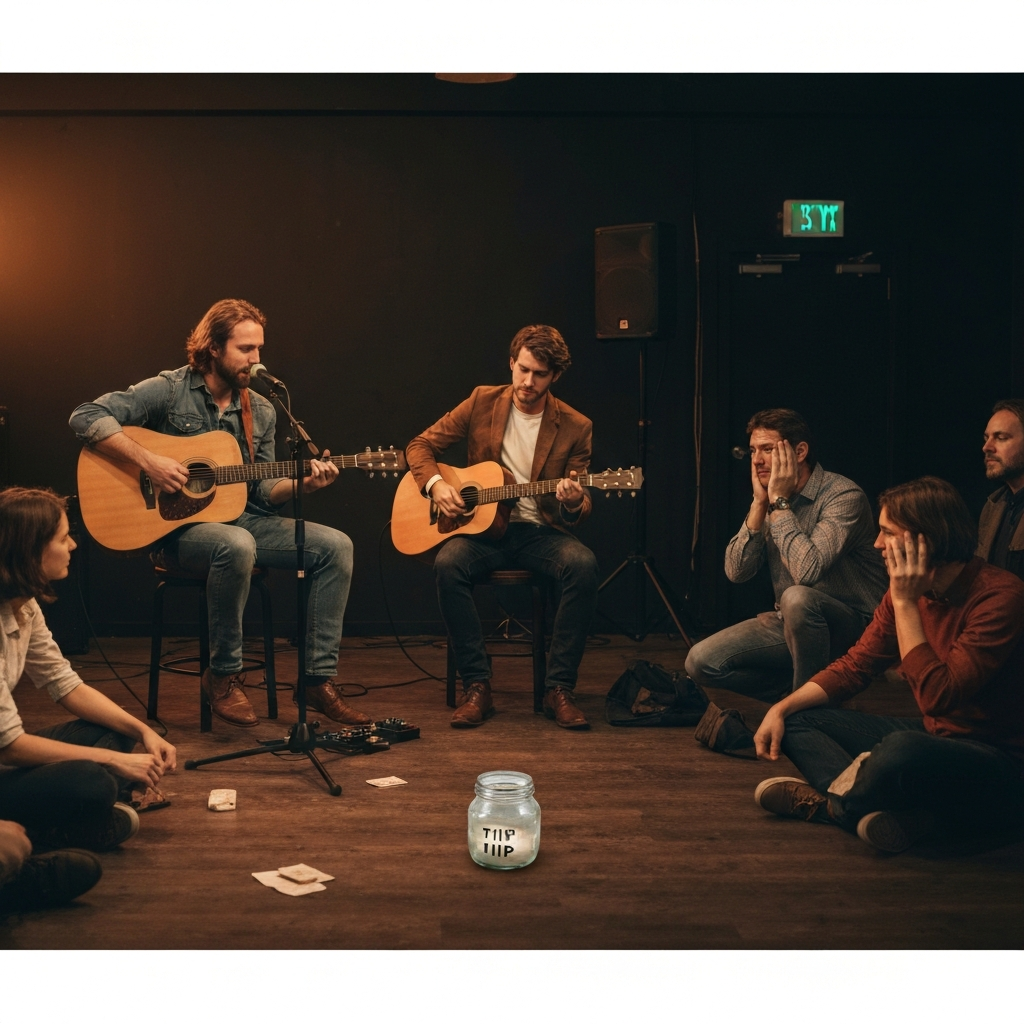
Here's the reality: most venues see packed crowds where fewer than 15% carry cash anymore. Your talent might be exceptional, but when someone wants to tip and finds only crumpled receipts in their wallet, that moment passes.
They forget. The impulse dies.
And you've lost that $5 or $10 that could have been yours.
The cashless audience problem
Digital wallets dominate daily transactions now. According to Federal Reserve data, cash usage has declined dramatically, with mobile payments growing exponentially.
Yet performers still rely on that lonely jar sitting near the stage. The mismatch is staggering, potentially 60% of your audience wants to tip but can't.
They're not stingy. They're simply unprepared for cash-only transactions.
Why talent alone isn't enough
Exceptional musicians often assume their work speaks for itself. Wrong approach.
Without a clear call-to-action or visible payment options, even enthusiastic fans don't know how to increase tips at open mic nights for their favorite acts. Traditional tip jars are passive, easy to overlook in dimly lit venues.
You need strategy alongside skill, making tipping visible, frictionless, and memorable.
Kiosque QR, the game-changer for digital tipping at live performances
Most open mic artists finish their set, say thanks, and watch potential supporters walk away empty-handed. Not because the audience didn't appreciate the performance.
Simply because pulling out cash feels awkward, and nobody carries bills anymore. Kiosque QR eliminates this friction entirely by letting fans tip with a quick smartphone scan.
No app downloads, no account creation, no barriers between appreciation and payment.
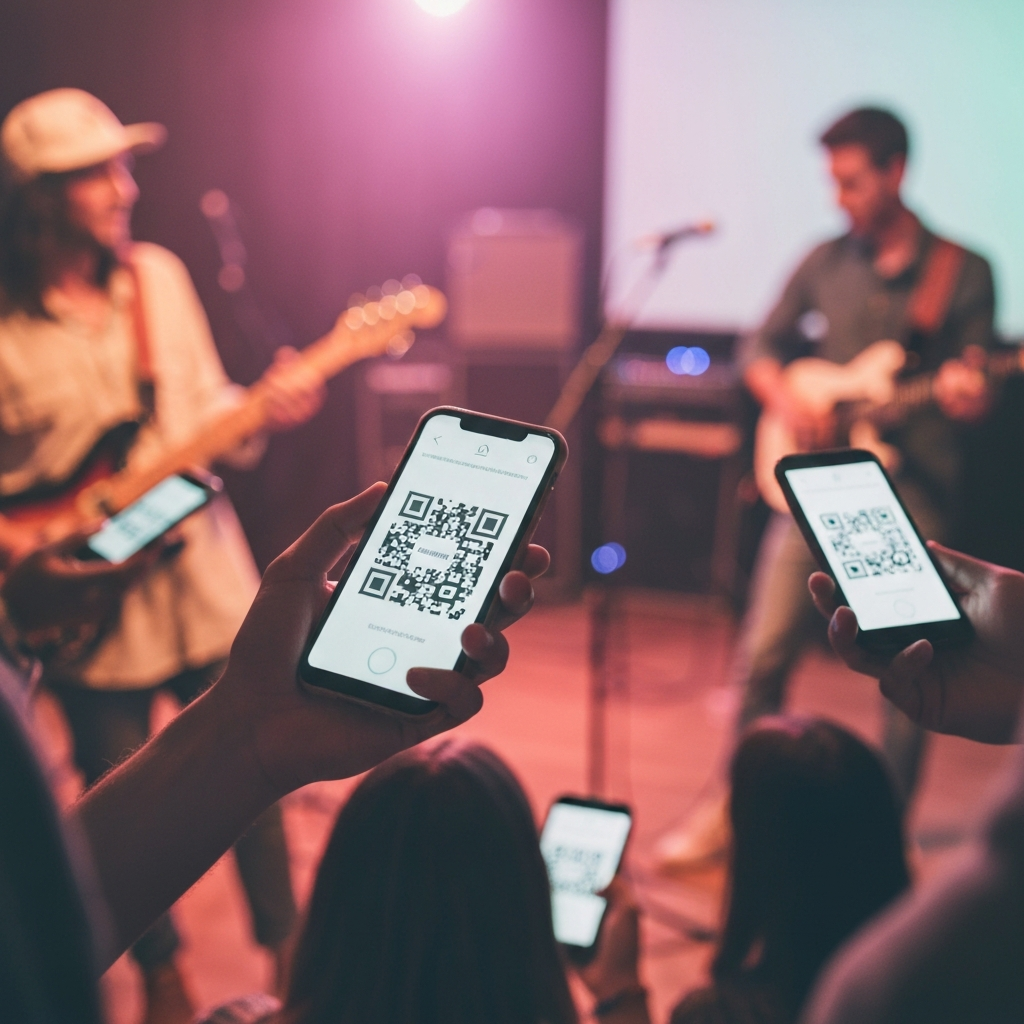
The platform generates your custom QR code in under two minutes. You don't need technical expertise or a merchant account.
Simply sign up, customize your artist profile with your name and performance style, then display your unique code on stage. Fans scan it with their phone's camera, choose their tip amount, and pay through cards or mobile wallets like Apple Pay and Google Pay.
The entire transaction happens in seconds while you're still on stage.
How Kiosque QR works for open mic artists
Traditional tipping methods create unnecessary complexity. Kiosque QR strips away every obstacle.
Here's what sets it apart for performers looking to increase tips at open mic nights:
- Zero upfront investment or monthly fees
- Accepts credit cards, debit cards, and all major mobile payment systems
- Professional branding that reinforces your artist identity
- Instant payout processing so you access your earnings quickly
- Works at any venue without requiring special equipment or venue cooperation
You control the entire experience. Print your QR code on a small card, display it on your phone screen, or project it behind you during your set.
The flexibility means it adapts to cramped coffee shop stages or larger performance spaces equally well.
Real results from performers using digital tips
Our experience shows that removing payment friction converts casual admirers into paying supporters. When tipping requires only a scan instead of fumbling for cash, more audience members follow through on their impulse to support you.
One performer reported that displaying a QR code during her acoustic set generated tips from people who'd previously just smiled and clapped. The simplicity matters because it transforms passive appreciation into active financial support, helping you build sustainable income from your craft.
Master your stage presence to command higher tips
Ever wonder why some performers walk away with twice the tips despite similar talent? It's not magic.
Stage presence creates an invisible connection that makes audiences reach for their wallets. When you command attention and deliver emotional resonance, people don't just appreciate your music, they feel compelled to support you financially.
Your eyes tell the story before you play a note. Genuine eye contact (not staring) creates moments of recognition that transform strangers into supporters.
Scan the room during instrumental breaks, linger briefly on individual faces, and acknowledge applause with a smile. This technique signals confidence while building personal investment in your performance.
What makes audiences open their wallets
Song selection carries more weight than technical perfection. Choose material that creates emotional peaks, not just showcases your range.
A well-placed cover everyone knows, followed by an original that tells a personal story, generates memorable contrast. Our experience shows performers who mix familiar comfort with unexpected vulnerability consistently increase tips at open mic nights.
Professional appearance doesn't mean formal attire. Clean, intentional style (whether polished or artistically disheveled) signals you take your craft seriously.
Pair this with confident posture and deliberate movement between songs. Small details matter: tune between songs rather than mid-performance, handle equipment smoothly, and maintain energy even during technical issues.
Performance techniques that increase perceived value
Storytelling between songs transforms a set into an experience. Brief context about why you wrote a song, or a humorous anecdote about learning to play it, creates emotional threads audiences follow.
Keep stories under 30 seconds to maintain momentum. This personal connection makes people want to support your journey, not just your music.
Tools like 3 Secrets to Maximize Artist Tips with Digital Tools can amplify this connection through seamless tipping options.
Kiosque QR tip: Energy management determines whether audiences remember your entire set or just the opening. Start strong to capture attention, dip slightly in the middle with an intimate ballad, then build toward a memorable closer that leaves them energized and ready to tip.
When and How to Ask for Tips Without Being Awkward
Most performers dread the tipping moment. They worry about sounding desperate or breaking the performance flow.
But here's what we've learned from hundreds of successful open mic artists: timing matters more than the words you use. When you mention tipping at the right moment, audiences actually appreciate the clarity.
They want to support you but need a gentle nudge about how.

The secret to increase tips at open mic nights lies in strategic placement of your ask. Never lead with it.
Build rapport first through your performance, then introduce the tipping option during a natural pause, typically after your second or third song when the audience has already decided they enjoy your work. This isn't manipulation; it's giving people permission to act on positive feelings they already have.
The 3-Second Rule for Mentioning Tips
Keep your tip request under three seconds. Seriously.
The longer you talk about money, the more uncomfortable everyone becomes. Try something like: "If you enjoyed that, I've got a tip jar by the stage, helps me keep doing this!" Then immediately transition back into performance mode.
Our experience shows that brief, cheerful mentions convert better than lengthy explanations about why you need the money (even if it's true).
What Top-Earning Performers Say on Stage
Successful artists use humor to disarm awkwardness. One Chicago performer we know says: "That tip jar over there?
It's not just decorative, though it does look nice." Audiences laugh, tension breaks, and wallets open. You can also use visual cues: a well-placed sign near your setup with a QR code (platforms like PayPal's QR code system work well) catches attention without verbal interruption.
After your set, stick around. That post-performance chat time often yields additional tips from people who needed a moment to grab their wallet or phone.
What successful open mic performers won't tell you about maximizing tips
Ever notice how certain performers consistently walk away with bulging tip jars while others barely cover their drink tab? The difference isn't just talent.
Seasoned performers deploy psychological strategies they've refined over countless nights, and most won't share these tactics openly because scarcity breeds advantage. Understanding these insider approaches can dramatically increase tips at open mic nights, transforming your performances from hobby expenses into legitimate income streams.
Psychological triggers that boost tip amounts
Smart performers seed their tip jars before anyone arrives. Dropping five singles and a couple fives creates immediate social proof, when audience members see others have already contributed, they perceive tipping as the expected behavior rather than optional charity.
Digital tippers use a similar trick: displaying recent contributions on their phone screen ("Thanks Sarah for $10!") during breaks normalizes generous amounts. The merchandise angle works beautifully here too.
Selling simple items like stickers or demo recordings priced at $5-10 creates anchoring, suddenly that $3 tip jar contribution feels modest, and many audience members will purchase both.
The compounding effect of building a regular audience
One-time tips are nice. Recurring supporters pay your rent.
Converting casual listeners into followers requires a follow-up strategy most performers skip. Collect contact information through your Kiosque QR platform, then nurture those connections with exclusive content or early access to new material.
A performer we know sends monthly voice notes to supporters, creating intimacy that translates into consistent financial backing. Some artists form mutual promotion networks with fellow performers, cross-promoting each other's tip platforms to expand reach exponentially.
How venue relationships multiply your earnings
Your QR code placement matters more than you think. Negotiate with venue owners for premium positioning, near the bar, by the exit, or projected during your set if they have screens.
Established performers leverage these relationships to secure better time slots when crowds are largest and wallets are open. According to busking research, strategic positioning can triple earnings compared to passive tip collection methods.
FAQ - Frequently Asked Questions
How much can performers realistically earn in tips at open mic nights?
Earnings vary wildly based on venue size, audience engagement, and your performance quality. Newcomers might collect anywhere from a few dollars to twenty bucks, while seasoned performers at packed venues can pull in fifty to over a hundred dollars in a single night.
Your tip income grows as you build a following and improve your stage presence. The difference between someone who connects with the crowd versus someone who just performs their set can be substantial.
Do digital tipping options like QR codes really increase tips compared to cash jars?
Yes, and the difference can be significant. Most audience members don't carry cash anymore, so relying solely on a tip jar means you're missing out on potential supporters who want to contribute but simply can't.
Digital options make tipping frictionless. Someone can scan your code and send five dollars in under ten seconds without fumbling for their wallet.
The convenience factor removes barriers that would otherwise prevent people from tipping at all.
Many performers report seeing their tip totals double or even triple after adding digital options alongside traditional cash collection. The key is offering both methods so nobody feels excluded from supporting you.
What's the best way to display a QR code during an open mic performance?
Place it where people naturally look after you finish. A small printed card on the stage edge works well, or you can include it on any merchandise display you set up near your performance area.
Some performers project their QR code on a screen behind them during their closing moments. The visual reminder catches people right when they're most impressed and likely to tip.
Should I mention tipping before or after my performance?
After, always after. Mentioning tips before you perform comes across as presumptuous and can create negative first impressions with an audience that hasn't even heard you yet.
Wait until your closing moments when you've delivered value and earned their appreciation. A simple, humble mention works best: something like acknowledging that tips help you keep performing and here's how they can support if they enjoyed the show.
Keep it brief and genuine. A lengthy pitch about needing tips undermines the goodwill you just built.
Point out your QR code or tip jar location, thank everyone for listening, and move on gracefully.
How do I handle venues that don't allow digital tipping displays?
Some venues restrict visible displays because they want to maintain a certain aesthetic or avoid turning the night into a marketplace. Respect their rules, but you still have options.
Include your tipping link in your verbal introduction when you mention your social media handles. Most venues won't object to you saying where people can find you online.
You can also share it in the venue's social media comments if they post about the event.
What percentage of audience members typically tip at open mics?
Honestly, it's usually between five and fifteen percent of the room. Most people come to enjoy free entertainment without planning to spend money, which is just the reality of open mic culture.
The percentage climbs when you deliver something memorable or emotionally resonant. Your goal isn't converting everyone, but rather making it easy for those who genuinely want to support you.
Conclusion: Turn Every Open Mic Into a Profitable Performance
Learning how to increase tips at open mic nights transforms these venues from practice stages into legitimate income streams. You now have 12 actionable strategies, from mastering stage presence to leveraging digital payment solutions, that successful performers use to consistently earn more.
Start tonight by implementing just three techniques from this guide. Set up your Kiosque QR digital tipping profile before your next performance so you're ready to capture tips from every audience member, whether they carry cash or not.
Ready to maximize your open mic earnings with seamless digital tipping? Create your free Kiosque QR artist profile today and start accepting tips via QR code at your next performance.
Join thousands of performers who've already ditched the empty tip jar for a solution that actually works. Visit Kiosque QR now to set up your profile in under 5 minutes, no technical skills required, just your passion for performing.
Your talent deserves to be rewarded properly.