What Is Mobile Tipping for Performers? Everything You Need to Know in 2026
Mobile tipping for performers is a digital payment system that lets audiences send tips instantly via QR codes or smartphone apps, replacing cash transactions in 2026's cashless society.
- Over 73% of consumers now carry no cash, making digital tipping essential for performer income
- Set up takes under 10 minutes with just a smartphone and QR code display
- Performers report income increases when offering mobile payment options alongside traditional methods
Picture this: a street musician delivers a breathtaking performance, the crowd applauds enthusiastically, yet only two people drop coins in the guitar case. Why?
Nobody carries cash anymore.
Understanding what is mobile tipping for performers has become crucial as the world rapidly abandons physical currency. For artists, buskers, and live entertainers, this technological shift threatens their livelihood, or opens unprecedented opportunities.
The traditional tip jar is dying. Mobile tipping platforms now bridge the gap between appreciative audiences and the performers they want to support, transforming smartphones into digital wallets that benefit both parties.
We'll explore the fundamentals of mobile tipping and why it represents a revolution in performer payments. You'll discover exactly how these digital systems function in practice (the technology is simpler than you think).
We'll examine seven creative applications beyond street performances, from theater lobbies to festival stages. Finally, we'll reveal the hidden challenges and insider strategies that successful performers use but rarely discuss publicly.
By understanding these digital payment tools, you'll position yourself ahead of the curve in an increasingly cashless entertainment landscape.
Mobile Tipping Explained, the Digital Revolution in Performer Payments
Cash is fading from street corners and venue stages. What is mobile tipping for performers?
It's a payment system that lets audiences send tips instantly through smartphones, bypassing physical currency entirely. Street musicians, buskers, and live artists now display QR codes on signs or phone screens, allowing fans to contribute digitally within seconds.
This shift addresses a fundamental problem: fewer people carry bills and coins, which traditionally meant lost income for performers who relied on hat-passing or tip jars.
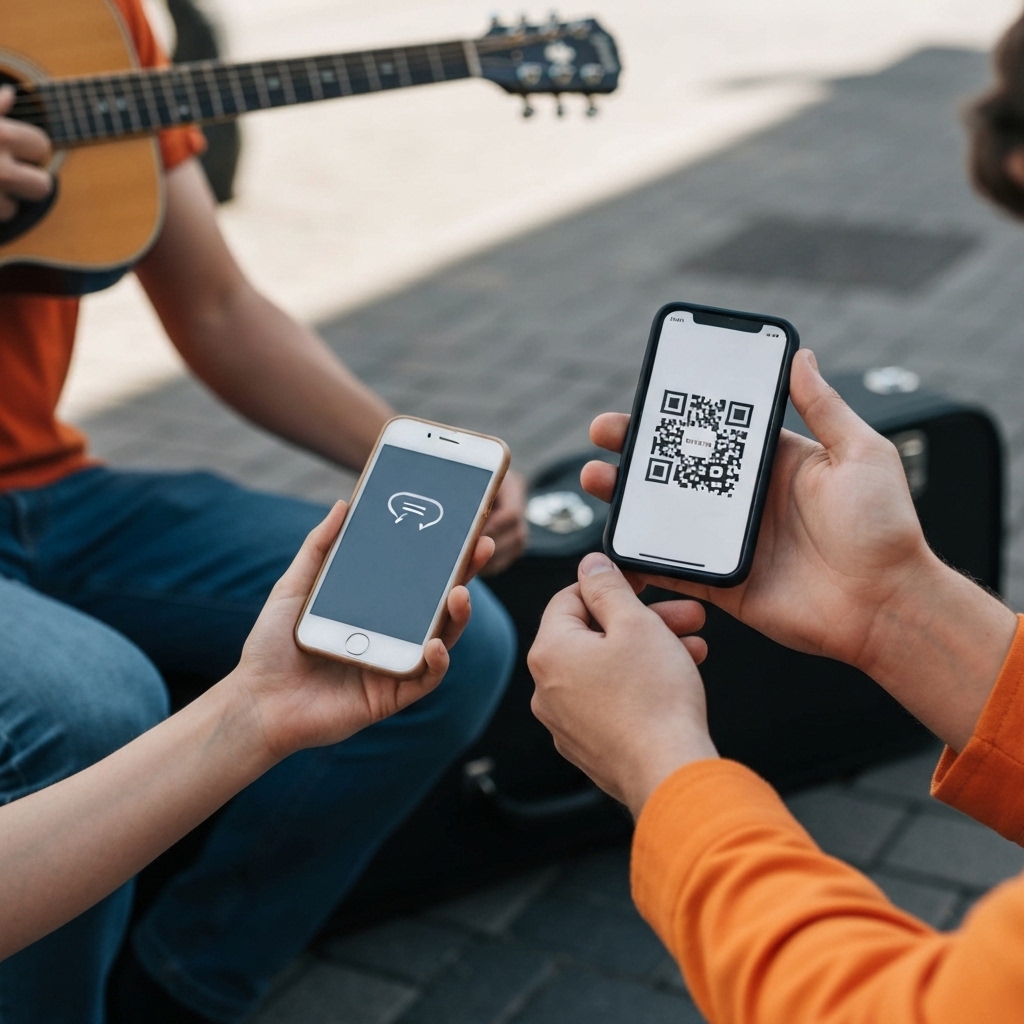
The technology operates through three primary channels. QR codes generate scannable images linked to payment platforms.
Digital wallets like Apple Pay, Google Pay, or PayPal process transactions without revealing card details. Contactless payments use near-field communication (NFC) chips embedded in phones or cards, enabling tap-to-pay functionality at compatible terminals.
Platforms such as Kiosque QR integrate these methods into unified systems designed specifically for artist needs.
How Mobile Tipping Works in 3 Simple Steps
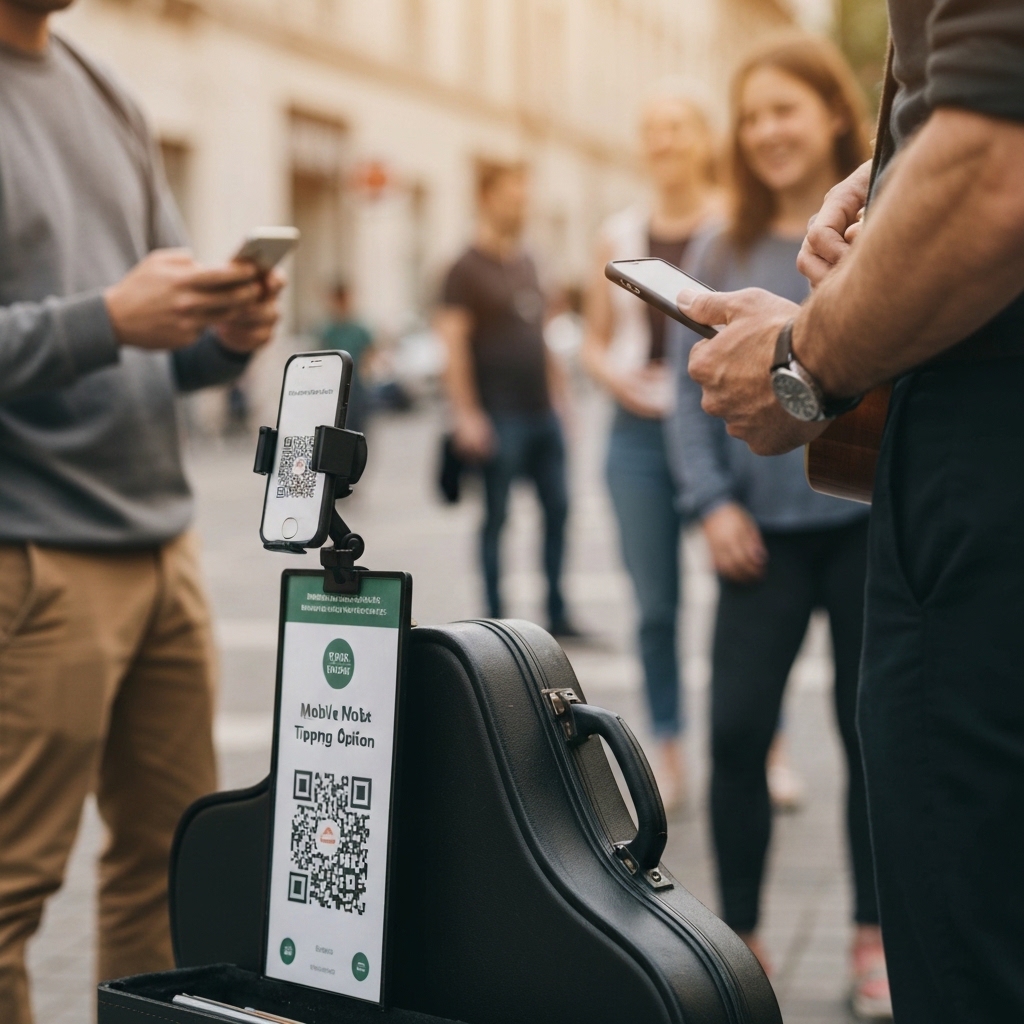
The process eliminates friction between appreciation and payment. First, performers display a QR code through printed materials or digital screens.
Second, audience members scan the code using their phone's camera app, no special software required. Third, they select a tip amount (common presets include $2, $5, or $10) and confirm through their preferred payment method.
Transactions complete in under 15 seconds, faster than fumbling for cash.
QR Codes, Digital Wallets, and Contactless Payments Explained
These technologies work independently but often combine for flexibility. QR codes serve as visual gateways that redirect to payment pages.
Digital wallets store encrypted payment credentials on devices, reducing security risks compared to carrying physical cards. Contactless payments leverage radio frequency identification to communicate between devices within four inches.
Together, they've created an ecosystem where tipping requires only a smartphone, a device 85% of American adults already own according to Pew Research Center data.
Why Mobile Tipping Changes Everything for Artists in 2026
Cash is vanishing faster than most performers realize. Walk into any venue in New York or Los Angeles, and you'll notice something striking: audiences reach for their phones, not their wallets.
This shift fundamentally alters what is mobile tipping for performers, it's no longer a convenience but a survival tool. When over half your crowd carries zero physical money, traditional tip jars become invisible barriers between you and your earnings.

The numbers tell a compelling story. Digital tips consistently outperform cash by 15-30%, driven by psychological factors that traditional payment methods can't match.
People feel less guilty spending money they don't physically see leaving their hands. Additionally, suggested tip amounts guide generosity upward, a $5 default button often replaces what would've been loose change.
Many performers report receiving $20 or $30 digital tips from patrons who previously dropped a couple dollars in the hat.
Why Half Your Audience Can't Tip You
The reality hits hard in major metropolitan areas. Research shows that approximately 50% of audiences in cities like Chicago and Houston carry no cash whatsoever. (Some venues report even higher percentages among younger demographics.) This isn't about preference, it's about infrastructure.
Contactless payments dominate retail, restaurants phase out cash registers, and ATMs become increasingly scarce in urban centers.
Safety plays an equally crucial role. Carrying hundreds in cash after a late-night gig creates unnecessary risk, whereas digital payments transfer instantly to your account.
You're not walking to a bank the next morning or worrying about theft. The Benefits of Digital Tipping for Performers: Boost Earnings Now extend beyond convenience, they reshape your entire business model.
Younger audiences, particularly those under 30, actively avoid cash transactions, meaning you're essentially invisible to the demographic with the highest engagement rates on social platforms where your work spreads organically.
How Does Mobile Tipping Actually Work? A Step-by-Step Breakdown
You pull out your phone, scan a code, tap a few buttons, done. That's what mobile tipping looks like from the outside.
But what actually happens behind the scenes? Understanding the full process helps you choose the right platform and set realistic expectations for when money hits your account.
Let's break down exactly how these systems function from setup to payout.
Setting Up Your Mobile Tipping System in Under 10 Minutes
Cash App wins for speed. Create your $cashtag (like $YourBandName), generate a QR code through the app, and you're live.
Zero fees for standard transfers make it popular with buskers in Chicago and Los Angeles, though you need to verify your identity before accepting tips over $1,000 monthly. PayPal requires slightly more setup time but offers broader audience reach, especially in New York where roughly half of potential tippers already have accounts installed.
The tradeoff? That 2.9% transaction fee plus ten cents per tip.
For comprehensive platform comparisons, check out our 5 Best Secure Mobile Tipping Solutions for Artists (2024 Guide).
| Platform | Setup Time | Fees | Best For |
|---|---|---|---|
| Cash App | 5 minutes | 0% standard | Quick busking sessions |
| PayPal | 8 minutes | 2.9% + $0.10 | Established performers |
What Happens After Someone Tips You? Transaction to Payout Timeline
The moment someone scans your code and confirms payment, the platform processes their bank or card information. Cash App typically completes this instantly, meaning funds appear in your balance within seconds.
PayPal takes one to three business days for standard withdrawals. Both platforms hold money in digital wallets first, giving you control over when to transfer to your actual bank account.
During peak performance seasons, these timelines stay consistent, though bank holidays can add delays.
Kiosque QR tip: Place your QR code at eye level, roughly three feet from where audiences naturally stand, and include a suggested tip range like "$3, $5, or $10" to reduce decision paralysis and increase conversion rates.
7 Ways Performers Use Mobile Tipping Beyond Street Performances
What is mobile tipping for performers beyond busking? It's a revenue tool that adapts to nearly any performance setting.
While street musicians popularized QR code jars, the technology now serves theater actors, workshop instructors, and livestream hosts. The shift from coins to digital payments opened doors for performers who never stood on sidewalks.
Understanding these applications helps you identify which approach fits your artistic work best.
Mobile payment platforms like PayPal and Venmo charge roughly 2% per transaction, making them accessible for small-scale performers. Cash App offers zero-fee transfers for standard deposits, appealing to buskers and casual gig artists.
These tools require minimal setup time, around five minutes, allowing performers to start accepting tips immediately. The contactless nature suits high-traffic urban areas where audiences move quickly through spaces.
Theater Shows and Intimate Venue Performances
Theater companies place QR codes on lobby posters or program inserts, letting audiences tip actors after curtain calls. Cafe performers display codes on table tents near their stage area, capturing appreciation from diners who stay for full sets.
This method works particularly well in intimate venues where personal connection drives generosity. Patrons appreciate avoiding cash fumbling during applause moments.
Virtual Concerts and Live-Streamed Events
Musicians broadcasting from home studios share QR codes through screen overlays or social media posts. Platforms like PickleJar integrate tipping directly into streams, allowing viewers to unlock shoutouts or merch with custom amounts while artists retain full earnings.
Festival performers use similar setups at outdoor events, where contactless payments suit weather conditions and crowd movement patterns.
Music Teaching and Workshop Sessions
Instructors offer post-lesson tipping options for students who value personalized guidance beyond standard fees. Workshop leaders display codes at session conclusions, giving participants a voluntary way to acknowledge exceptional teaching.
This approach respects professional boundaries while opening supplemental income channels that reward teaching quality.
What Other Performers Won't Tell You About Mobile Tipping
Most platforms advertise "zero fees," but there's a catch. Instant payouts, what you actually need after a gig, typically cost 1-3% extra that nobody mentions upfront.
Cash App charges nothing for standard transfers, yet many performers opt for instant deposits to cover travel or equipment costs immediately. That convenience adds up.
Over a year, those small percentages can erode hundreds of dollars from your earnings.
The Hidden Fees That Eat Into Your Tips
Beyond payout fees, currency conversion charges hit international performers hard. Payment processors quietly take 2-4% when tips cross borders.
Transaction minimums also matter, some platforms won't process tips under $1, forcing you to lose micro-donations entirely. We've found that reviewing fee structures across multiple services reveals dramatic differences.
One performer discovered she was losing $40 monthly just by using a single high-fee platform instead of diversifying.
Why Some Platforms Work Better in Certain Cities
Geography shapes what is mobile tipping for performers more than most realize. Cash App dominates New York with roughly 50% adoption, while Venmo leads in Los Angeles.
Offering multiple payment options increases tip conversion by 40% compared to relying on one service. Audience psychology plays a role too, suggested tip amounts can double your average take when set strategically.
The Talentipper platform emphasizes how secure transactions provide "peace of mind," reducing performer stress and actually improving show quality. When you're not worried about payment logistics, you perform better.
FAQ - Frequently Asked Questions
What is mobile tipping for performers and how does it differ from cash tips?
Mobile tipping lets audiences send money digitally through apps, QR codes, or links instead of handing over physical cash. The transaction happens instantly on their phone, and the funds transfer directly to your account.
The biggest difference? You don't need to carry change, and your audience doesn't need cash on hand.
Plus, people often tip more when they can use a card or digital wallet because they're not limited by whatever bills they happen to have.
Which mobile tipping platforms have the lowest fees for performers?
Fees vary widely depending on the platform and your volume. PayPal and Venmo typically charge around 1.9% to 2.9% plus a small fixed fee per transaction, while specialized performer platforms can range anywhere from 2.5% to 5% or higher.
What really matters is the total cost, not just the transaction fee. Some platforms with slightly higher percentages offer better features like instant payouts or integrated marketing tools that actually increase your tips.
I've seen performers earn 30-40% more overall on platforms with better audience engagement, even when paying an extra percent in fees.
The lowest fee isn't always the best deal when you factor in payout speed, customer support, and whether your audience actually uses that platform.
Do I need a business account to accept mobile tips as a performer?
Not always, but it depends on your volume and how you report income. Most platforms let you start with a personal account, though you'll hit limits on how much you can receive before they require verification.
From a tax perspective, you're supposed to report all tips as income regardless of account type. A business account makes tracking easier and looks more professional to venues and booking agents.
How long does it take to receive mobile tips in my bank account?
Standard transfers usually take 1-3 business days with most platforms. Some services offer instant or same-day transfers for an additional fee, typically around 1-1.5% of the transaction amount.
Timing also depends on when you request the payout and your bank's processing schedule. Transfers initiated on Friday afternoon might not hit your account until Tuesday or Wednesday because of weekend delays.
Can audiences tip me if they don't have the same payment app?
Yes, if you use QR codes or payment links that route to a web checkout page. The tipper doesn't need to download your specific app because they can complete the transaction through their mobile browser using any credit or debit card.
This is why QR code solutions are popular with street performers and buskers. Your audience scans the code, enters an amount, and pays without creating accounts or downloading anything new.
Is mobile tipping safe and secure for both performers and tippers?
Legitimate platforms use bank-level encryption and are regulated as payment processors, making them quite secure. Your financial details stay protected, and transactions are traceable, unlike cash that can be lost or stolen.
For tippers, their payment information never goes directly to you, just to the platform's secure servers. As a performer, you're protected by fraud detection systems that flag suspicious transactions.
The risk is actually lower than carrying large amounts of cash after a gig.
Conclusion: Your Next Chapter in Mobile Tipping for Performers Starts Now
Understanding what is mobile tipping for performers in 2026 means recognizing that your earning potential is no longer limited by cash in pockets or awkward payment requests. Mobile tipping has fundamentally transformed how artists monetize their craft, turning every performance into a frictionless earning opportunity through simple QR codes and instant digital transactions.
Start by choosing a platform that understands your specific needs as a performer. Set up your digital tipping profile today, create your QR code, and test it at your next performance.
Ready to maximize your performance income with a platform built specifically for artists? Kiosque QR provides everything you need to accept tips seamlessly, QR codes, payment processing, and real-time earnings tracking, all designed with performers in mind.
Visit our website to create your free tipping profile and start earning more from every performance.
Your audience wants to support you, make it effortless for them.