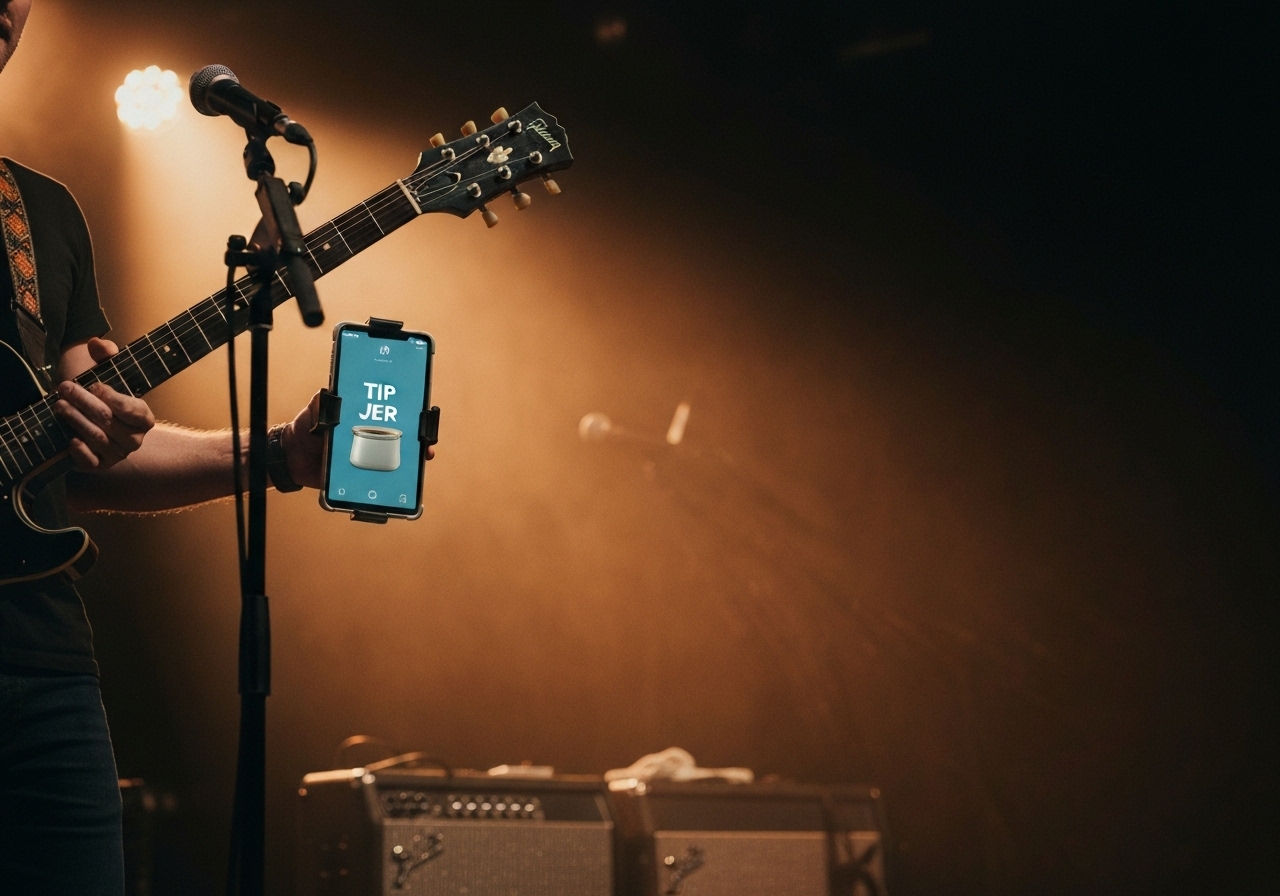
What is a Digital Tip Jar? 3 Benefits for Creators
You finish a set. The energy is high. You killed it.
A fan walks up to the stage, beaming with excitement, and reaches for their wallet. Then, the inevitable frown appears.
"I don't have any cash on me," they say, looking apologetic.
You smile and say it is okay, but inside, you know you just lost income. We have all been there. The reality is that fewer people carry physical money now.
In a world dominated by contactless payments and mobile wallets, the old guitar case or fedora on the floor is gathering dust rather than bills.
This is where technology steps in to save the day.
If you are wondering what is a digital tip jar, you are looking at the modern solution to the "no cash" problem. It is the bridge between a fan's appreciation and your bank account. It removes the friction of finding an ATM and allows your audience to support you instantly with the device they are already holding.
We are going to walk you through everything you need to know about this essential tool. We will cover how it works, why it boosts your income, and the virtual tip jar solutions for performers that effectively turn applause into sustainable revenue.

The Basics: What is a Digital Tip Jar?
Let’s strip away the buzzwords. A digital tip jar is simply a method for artists, musicians, and performers to accept voluntary payments electronically.
Instead of dropping a dollar bill into a bucket, a fan scans a code or clicks a link to send money.
Think of it as a virtual version of your open guitar case.
It is completely cashless and usually contactless. At its core, the answer to what is a digital tip jar is quite simple. It's basically a way for your audience to send you a tip right from their phones, in real-time, while they're still buzzing from your performance.
Look, most of these tools have three basic parts:
- The Trigger: First, there's the "trigger"—that's usually the QR code you put out at your shows or the link you stick in your social media bio.
- The Processor: Then you have the 'processor'. This is just the engine that actually moves the money around, whether it's PayPal, Stripe, or a specialized app like Kiosque QR.
- The Destination: Your bank account or digital wallet where the funds eventually land.
It sounds technical, but for the user, it is seamless. They scan, they tap an amount, and they pay. For you, it means you never miss out on a tip just because someone forgot to visit the ATM before the show.
The Problem With Cash
We need to talk about why this shift happened. It is not just about technology being cool.
It is about consumer behavior. Research indicates that Millennials and Gen Z rarely carry cash.
In fact, over 40% of older fans might not have cash on hand at your show either.
If your only collection method is physical currency, you are effectively putting up a "Do Not Pay" sign for nearly half your audience.
That is lost revenue. By ignoring what is a digital tip jar, you are leaving money on the table every single night.
How Does a Digital Tip Jar Work?
So, how does this all actually work?
It's pretty simple, really, but once you get the process, you can make it work even better for you. No matter if you're busking on a corner, telling jokes on stage, or touring with your band, it pretty much follows the same path.
1. Connection
It all starts with the connection.
You put out your unique QR code or a simple link.
That's your "ask." You could get it printed on a card for your mic stand, throw it up on a screen behind the stage, or even just have a sign at your merch table. A fan just points their phone camera at it, and boom, a notification pops up.
2. The Landing Page
Once they tap that, they land on a special page. And this is where branding really makes a difference. Sure, a generic PayPal page gets the job done.
But a dedicated page that's all about you—like the ones we offer at Kiosque QR—makes you look way more professional. They'll see your photo, read your story, and find all your social links in one spot.
3. The Transaction
The fan selects an amount. Interesting data suggests that digital tips are often larger than cash tips.
Why?
Because the "pain of paying" is lower with a card.
Digging for a crumpled five-dollar bill feels like spending money. Double-clicking a side button on an iPhone feels like nothing.
Research has shown consumers are willing to pay significantly more using credit cards versus cash.
4. The Confirmation
The payment goes through. You get a notification (nothing beats seeing that notification pop up mid-set), and the fan gets a dopamine hit from supporting an artist they love. They might even get a thank-you message or a chance to follow your social media immediately after.
Why You Need One: The Benefits of Digital Tipping for Performers
You might be thinking that setting this up is just another administrative task. Stick with me here.
The benefits of digital tipping for performers go far beyond just "getting paid." It actually changes the relationship you have with your audience.
Instant Availability
Impulse is your best friend. A fan hears a song they love.
They want to show appreciation *right now*.
If they have to wait until the set break to walk to the front, the impulse might fade. With a digital solution, they can tip from the back of the room while you are still playing the bridge.
Safety and Security
Let's be real about the gig economy.
Carrying a bucket full of cash out of a venue late at night is not always safe. Digital tips go strictly to the cloud. No one can swipe your QR code and run away with your earnings.
It is a layer of protection that touring artists definitely appreciate.
Data Collection
Cash is anonymous. You have no idea who put that twenty in the jar. Was it the guy at the bar?
The couple in the front row?
A digital transaction often gives you a name or an email address.
This allows for follow-ups. You can thank top tippers or invite them to your next show.
It transforms a one-time transaction into a long-term fan relationship.
Platforms like Bandzoogle note that you can capture supporter names to build community, which makes the digital jar a marketing tool as well as a financial one.
Global Reach
Are you doing livestreams?
A physical bucket is useless on Instagram Live or Twitch. A digital link allows a fan in Tokyo to tip a guitarist in Toronto. This removes geography from the equation entirely.
Virtual Tip Jar Solutions for Performers: A Comparison
Now that we have established what is a digital tip jar and why it is vital, let's look at the tools available. Not all jars are created equal. Some are just payment processors, while others are full-fledged artist platforms.
1. The General Payment Apps (PayPal, Venmo, Cash App)
These are the giants.
Everyone has them. You can print a QR code from your PayPal app and stick it on your case.
Pros: High trust factor. Most fans already have the app installed.
Cons: It feels transactional.
It looks like you are paying a utility bill rather than supporting art. You don't get any branding, there's nowhere to put your bio, and you can't link out to your other profiles.
It’s just about the money, nothing more.
2. The Creator Platforms (Patreon, Ko-fi)
Then you have places like Patreon or Ko-fi, which are really designed for ongoing fan support. They're great if you're looking for recurring monthly income from memberships.
Cons: The downside? There's a lot of friction.
A fan might have to create a whole new account or click through a bunch of menus just to send you five bucks. In a live show where every second counts, that’s just too clunky.
3. The Artist-Centric Solutions (Kiosque QR)
This is where we sit.
We looked at the market and realized artists needed something faster than Patreon but prettier than PayPal.
The Kiosque QR Difference:
We allow you to create a personal page in one minute.
No coding. You get a unique QR code.
When fans scan it, they see YOU. They see your Instagram, your TikTok, and yes, a prominent "Tip" button.
It is a digital business card and a bank vault in one.
You need a solution that positions you as a professional. Sending someone to a raw Venmo link (@john-smith-293) lacks the polish of a dedicated artist landing page.
Where to Place Your Digital Tip Jar
Placement is everything. You can have the best setup in the world, but if people don't see it, you won't get paid.
When considering what is a digital tip jar strategy, visibility is key.
The Merch Table
This is prime real estate. Even if people aren't buying a t-shirt, they often browse. A small sign saying "Support the band—Scan to Tip" catches those who want to support but don't want more clutter in their closet.
On Stage
If you are a solo performer, a tasteful sign on your mic stand or innovative projection behind you works wonders. For bands, putting the QR code on the bass drum head is a bold move that actually works surprisingly well in intimate venues.
Livestreams
If you are streaming on Twitch, YouTube, or Facebook, you need an overlay. Planetary Group suggests using pinned comments or direct screen overlays to keep the link visible at all times.
The easier you make it, the more you earn.
Business Cards
Yes, physical cards still matter. Handing out a card with your QR code ensures that even if they don't tip tonight, they have your link for later.
They might check you out on Spotify the next day and decide to drop a tip then.
The Psychology of Tipping: How to Ask
This is the hardest part for many artists. Asking for money feels awkward.
It feels like begging.
But it helps to reframe the conversation.
You are not asking for charity. You are providing value—entertainment, emotion, joy—and giving people an opportunity to reciprocate.
Here is how to do it without killing the vibe.
The "Value Exchange" Script
Don't say: "Please help me out, I'm broke."
Do say: "If you're having a good time tonight and want to keep the music going, you can support us by scanning the code right here. It helps us get to the next town."
Gamification
Make it fun. "If we hit $50 in the digital jar tonight, we'll play that obscure cover song you all shouted for." This turns tipping into a group activity.
It creates a shared goal.
Visual Cues
Sometimes you don't need to say anything.
A well-designed sign that explains what is a digital tip jar does the heavy lifting. Use clear text: "Scan to Support." Add icons of the payment methods you accept (PayPal, Visa, etc.) so people know instantly that they can use their phone.
Advanced Strategies for Different Performers
Not all artists are the same. A street magician needs a different strategy than a jazz pianist.
For Buskers and Street Performers
Speed is your currency.
People are walking by. Your QR code needs to be huge.
I mean, visible from ten feet away.
Use Kiosque QR to create a landing page that loads instantly. You cannot afford a slow-loading website here. Every second of lag is a lost pedestrian.
For Corporate Event Musicians
This is a delicate space. You cannot be too aggressive.
A small, elegant acrylic stand on the piano is perfect. It looks professional and discreet.
Guests at these events often don't carry cash but are happy to tip generously for a request via card.
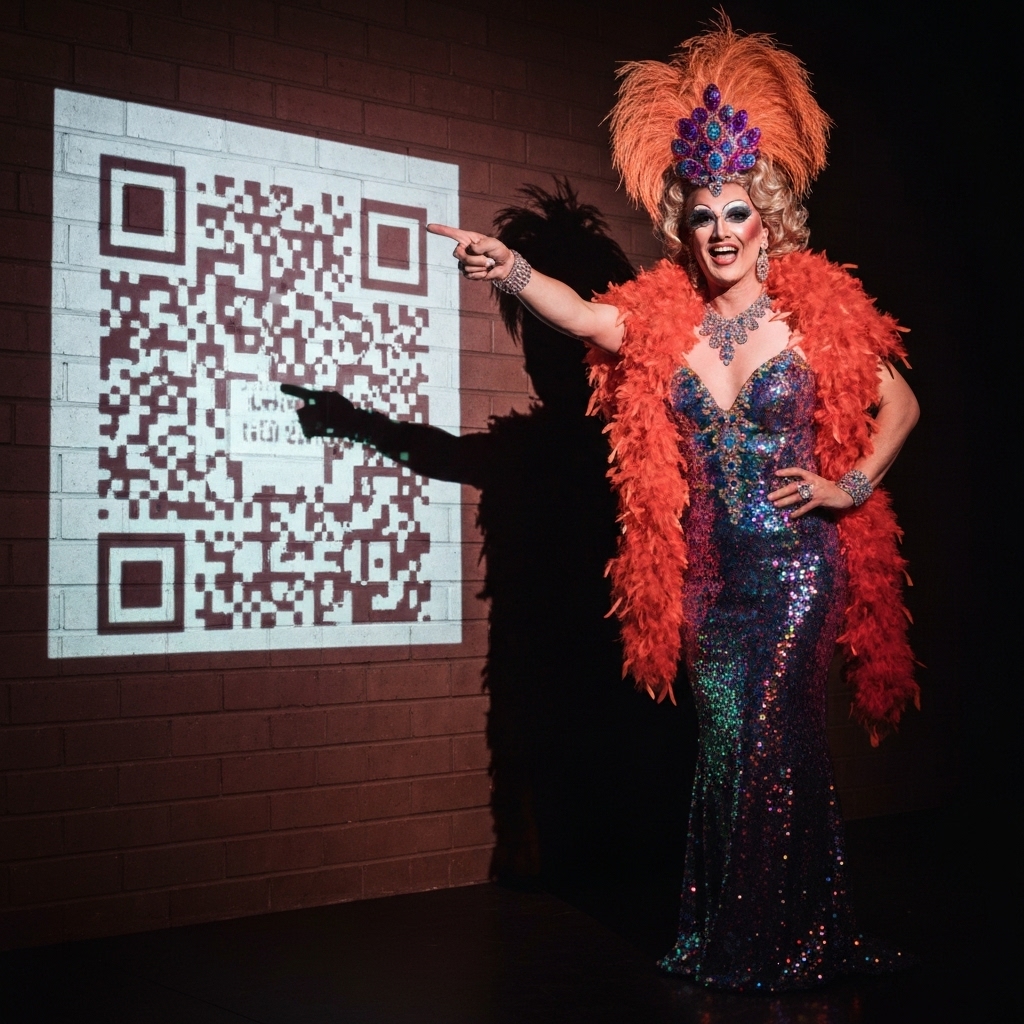
For Drag Performers
Digital tipping has revolutionized drag.
Traditionally a cash-heavy culture, many performers now wear QR codes or have them projected. The energetic nature of these shows allows for more aggressive call-to-actions.
"Get your phones out!" is a standard part of the show.
Common Myth-Busting: "It isn't Rock n' Roll"
There is a lingering stigma that using technology for tips feels too "corporate" or "robotic." Some purists argue that it ruins the romance of the starving artist.
That is nonsense.
The Beatles would have used a digital tip jar if they could. Mozart would have had a QR code.
Being a professional artist means adapting to the times. Financial stability allows you to create better art.
There is nothing romantic about not being able to afford guitar strings because your audience didn't have cash.
Furthermore, relying on platform-native tipping (like generic Spotify donation buttons) can be tricky. As some writers point out, it shifts the responsibility to fans while platforms still pay low royalties.
However, a direct digital tip jar that you control keeps the power in your hands. It is the most punk rock thing you can do: cut out the middleman and get paid directly by the people who love your work.
The Technical Setup: A Step-by-Step Guide
Ready to get this set up for your own act?
Honestly, it takes less time than tuning a 12-string, I promise.
I'll walk you through the process using Kiosque QR as an example, but the basic idea is the same for most platforms.
Step 1: Create the Account
First, just create an account. On a platform like Kiosque QR, you can sign up in just a few clicks.
You don't have to know a lick of code.
Step 2: Build Your Profile
Next, you'll build out your profile by uploading a good, high-res photo. This is what helps fans connect the person they see on stage with your digital page. Then, write a quick bio—keep it short and sweet.
Something like, "Jazz trio based in NYC" is perfect. Don't forget to link your socials!
This part is so important because your tip jar page is also a great way to get more followers.
Step 3: Connect Payment
Next up: connecting your payment method. If you decide to go Premium, you'll just link up your PayPal.me or whatever processor you use.
Just double-check that your currency is set right.
Step 4: Generate the Code
After that, the app automatically generates your unique QR code. Download it in high resolution. Do not take a screenshot; download the actual file to ensure it prints crisply.
Step 5: Print and Distribute
Put it on business cards. Print a laminated sign for your case. Add it to your digital press kit.
Make it ubiquitous.
Legal and Tax Implications
We wouldn't be doing our job if we didn't mention this. It is the boring part, but it saves you headaches later.
Digital tips are income. Unlike cash which...
well, often goes unreported (we aren't juding, but the IRS does), digital trails are permanent.
Payment processors like PayPal will issue tax forms if you cross certain earning thresholds.
Ideally, you should set aside a percentage of your digital tips for tax season.
Treat your art like a business, and it will pay you like one.
Overcoming the "Awkward Barrier"
We discussed the script, but let's talk about the mindset. You have to believe you are worth the tip.
If you project confidence regarding the technology, the audience will follow.
If you act sheepish about the QR code, they will hesitate.
Treat the QR code like another instrument. It is part of your gear. Check it before the show.
Make sure the link works. When you reference it, point to it with the same confidence you use when pointing to your drummer during a solo.
Kiosque QR: Designed for the Artist
You have options. We know that. But we built Kiosque QR specifically because generic tools fail artists.
They are too clunky, too ugly, or too expensive.
We focused on speed.
You perform, they scan, you earn.
We also focused on the aesthetic. Your page looks like your page, not a bank receipt. Plus, we integrated the social element.
Since you are sending people to a link anyway, why not get a generic tip and a new Instagram follower at the same time?
Our Premium version unlocks the direct PayPal integration, making the flow even smoother. But even the free version allows you to centralize your digital identity, which is the first step toward monetization.
You can create up to 3 different artist pages under one account. This is perfect if you play in a wedding band on Saturdays, a jazz duo on Fridays, and do solo busking on Sundays.
Each act gets its own branding and tip flow.
Wrapping Things Up
The music industry is tough.
The gig economy is unpredictable. You cannot control if the venue promotes the show properly. You cannot control if it rains during an outdoor festival.
But you can control how easy you make it for people to support you.
Asking what is a digital tip jar is the first step toward modernizing your career. It is the realization that your fans want to support you, but the old mechanisms are failing them. By adopting a virtual solution, you are not just asking for money; you are facilitating a connection.
You are removing the barrier of "I don't have cash." You are creating a professional digital footprint.
You are collecting data that helps you grow while you sleep.
The guitar case will always be a classic symbol.
But the QR code is the future of sustainable artistry.
Don't leave your earnings to chance or the contents of a fan's pocket.
Ready to level up your performance?
Start your artist page with Kiosque QR today and turn every spectator into a potential supporter.
FAQ: Digital Tip Jars for Artists
Is a digital tip jar safe to use?
Yes. Reputable platforms use encrypted payment processors like PayPal or Stripe. Your banking details are never exposed to the public; they only see a payment interface.
Do I need a website to have a digital tip jar?
No. Services like Kiosque QR act as a mini-website.
They host your bio, links, and tip button, so you don't need to pay for hosting or learn web design.
Can I use a digital tip jar for livestreams?
Absolutely.
It is actually recommended.
You can post the direct link in the chat or use software to display the QR code on the video feed itself.
Does Kiosque QR take a commission on my tips?
Kiosque QR does not take a cut of your tips.
However, the payment processor you link (like PayPal) will typically charge their standard transaction fee.
What if my audience is older and doesn't use QR codes?
You would be surprised.
Since 2020, QR code usage has skyrocketed across all demographics. However, it is always smart to keep a physical jar out as well.
The goal is to give them options, not restrict them.