
5 Top Apps for Independent Artists in 2025
Let's be real—being a musician today means you're doing a lot more than just playing music. It's not just about writing songs or practicing scales these days, is it?
Suddenly, you're also a marketing manager, social media guru, booking agent, and content creator—all rolled into one. Yeah, it can get overwhelming fast.
But the good news?
The digital world has finally started catching up, with tools built to actually help.
We have looked at the trends, analyzed the data, and we are ready to break down the top apps for independent artists in 2025 that actually move the needle.
These aren't just shiny new toys but essential tools designed to simplify your workflow and amplify your reach.

Finding the right technology stack is the difference between shouting into the void and building a sustainable career. Whether you are looking for an easy artist networking platform or complex data analytics, the goal remains the same today. You want to be heard.
We are going to look at the best solutions for distribution, engagement, and promotion.
But before we dive into the global giants, we need to address the foundation of your digital identity. You need a central hub that connects the physical world to your digital presence instantly.
1. Kiosque QR: The Ultimate Artist Promotion Tools with QR
Picture this situation. You just finished a killer set at a local venue.
The energy is high, and people are coming up to you asking where they can find your music. You could try to shout your Instagram handle over the noise of the bar, or you could hand them a sweaty paper flyer they will lose in five minutes.
Or, you could point to a QR code.
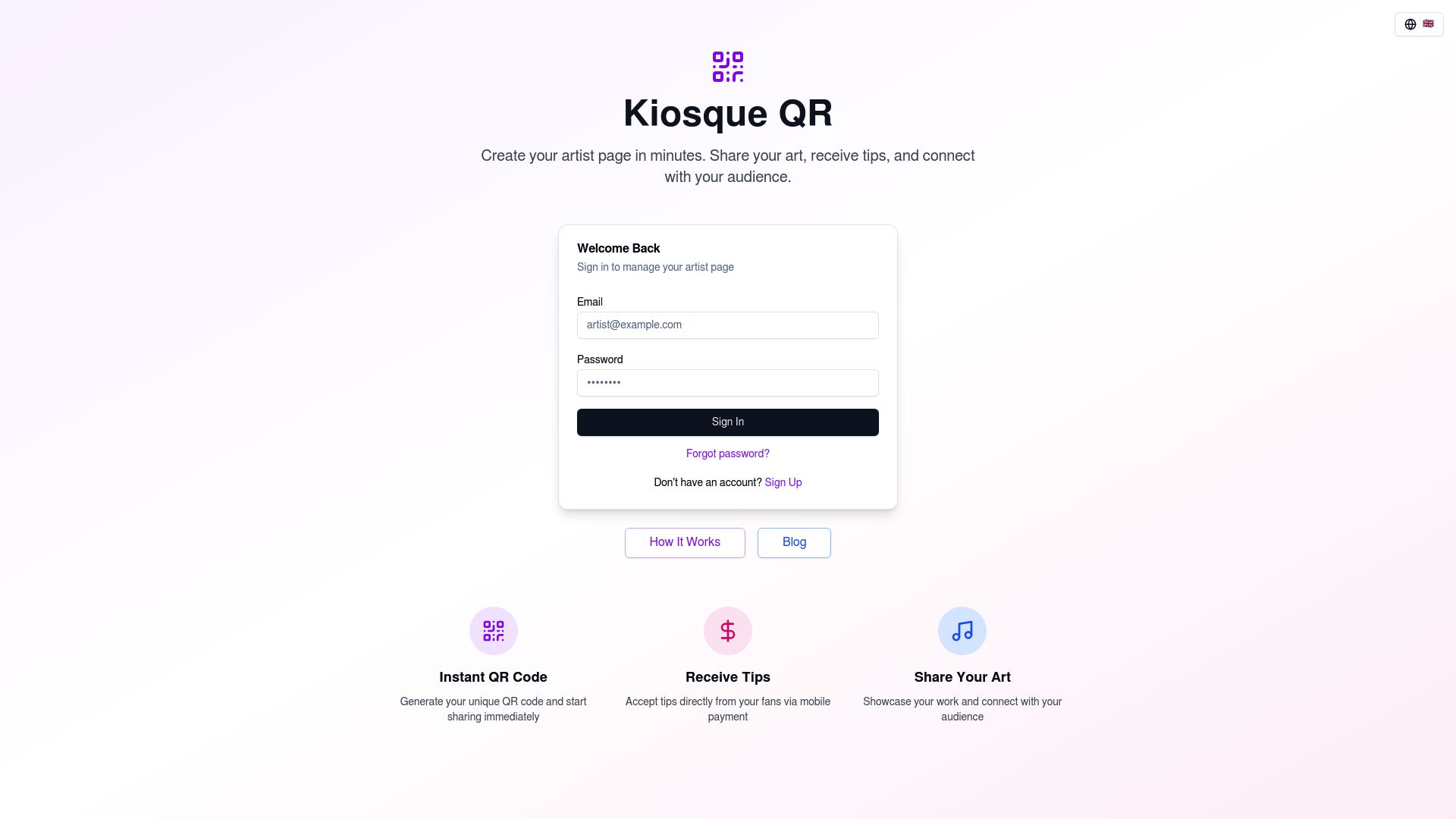
This is where Kiosque QR changes the game. It serves as the most efficient entry point among the top apps for independent artists.
We designed this specifically for performers who need a "link-in-bio" solution that works in the real world. You don't need coding skills or a budget for a web designer. In about one minute, you have a sleek, professional page hosting all your links.
Why is this your first step?
Because simplicity converts. When a fan scans your code, they land on a page that is optimized for their phone. They can follow you on Spotify, check your YouTube, or tip you via PayPal immediately.
It acts as an easy artist networking platform that bridges the gap between your live performance and your online growth.
Without this central hub, the traffic you generate from the other apps on this list has nowhere to land. Establish your base first.
Then, use the heavy hitters below to drive traffic to it.
2. Spotify for Artists: The Data Powerhouse
You cannot talk about the top apps for independent artists without mentioning the titan of streaming. Spotify for Artists has become the industry standard for exposure and analytics. It is no longer just about having your songs on the platform.
It is about managing your profile and understanding who is listening.
We have noticed a shift in how artists use this tool. It used to be just for checking stream counts.
Now, it is a promotional weapon. You can pitch unreleased music to playlist editors directly through the dashboard.
Getting on a playlist like "Release Radar" or "Discover Weekly" can literally change your career overnight.
The analytics are incredibly deep. You can see where your listeners are located, what other artists they like, and the gender and age breakdown of your audience.
Honestly, that data is pure gold when you're planning a tour or figuring out where to run ads. Industry insights even show that Spotify is still the number one way people discover new music source.
Just remember, you can't upload your tracks straight to Spotify. You'll need a distributor for that, which brings us to our next must-have tool.
3. Getting Your Music Out There: DistroKid vs. iMusician
Okay, let's talk about the big one: getting your music onto streaming services. This is probably the most critical part of any release strategy. Right now, two names keep popping up for very different reasons: DistroKid and iMusician.
DistroKid: For Artists Who Move Fast
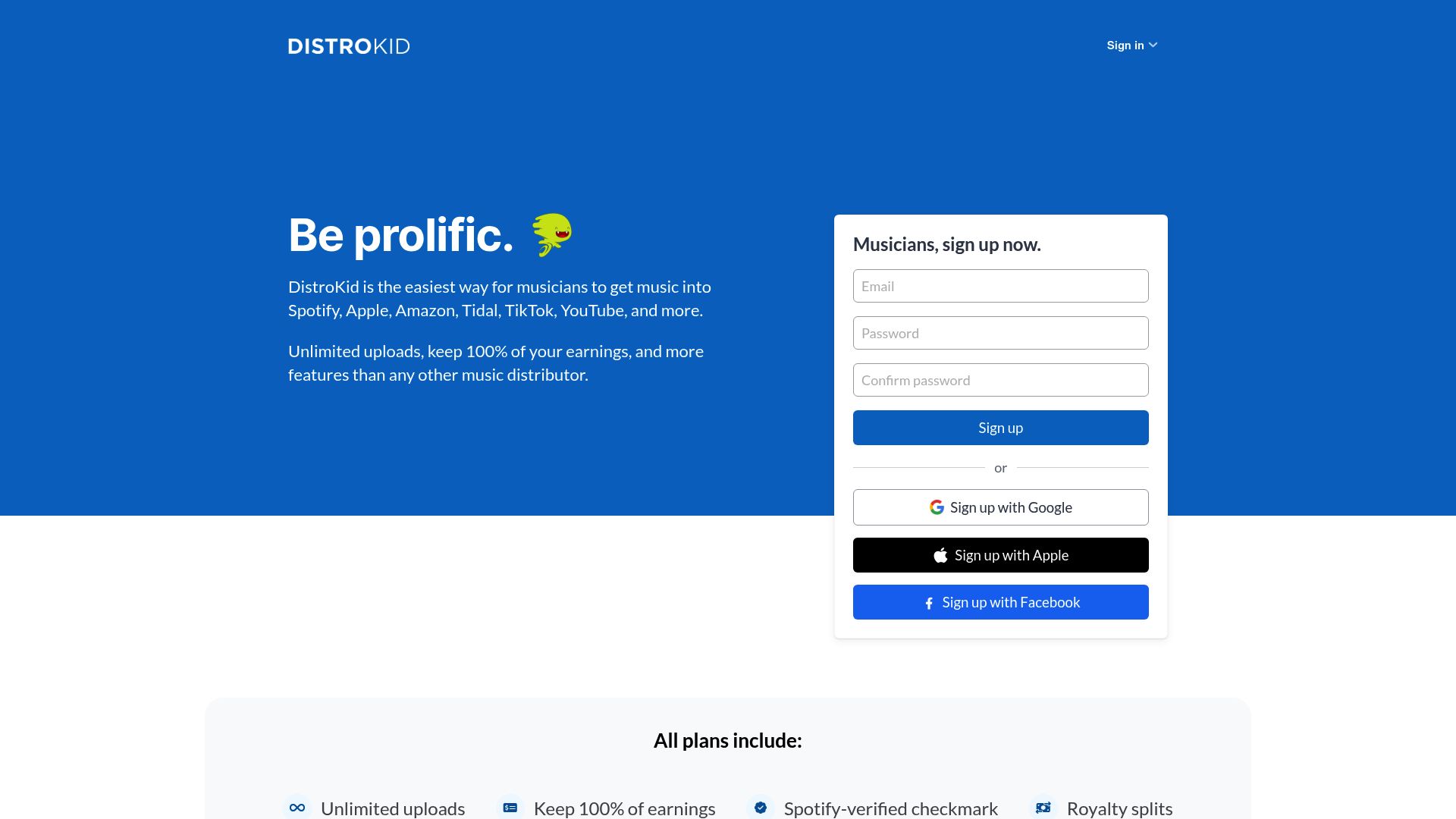
If you're the kind of artist who's constantly dropping new tracks, DistroKid is almost definitely your best bet.
Their whole model is a simple subscription: you pay one flat fee per year and get to upload as much music as you want. And the best part?
You keep 100% of your royalties, which is a massive deal. I also love their "HyperFollow" feature for pre-saves—it lets you build hype and capture fans before your track is even out.
Speed is their major advantage. They are known for getting music into stores faster than almost anyone else. This supports the modern independent artist's need for speed and scale source.
📸 distrokid.com
iMusician: The Safety Net
On the other hand, we have iMusician. This platform is praised for exceptional transparency and is especially valued by European artists. They have this unique "forever online" guarantee, which means exactly what it sounds like: even if you stop paying their subscription, your music stays live on all the platforms.
That kind of peace of mind is pretty hard to find. Plus, their pricing is flexible—you can either go with a subscription or just pay for each release as you go.
So, if you're worried about your music disappearing because of a missed payment, iMusician is basically your safety net source.
4. SoundCloud: Where Your Community Lives
Think of it this way: if Spotify is for your polished, final tracks, SoundCloud is still the raw, beating heart of the creator community.
It's all about creative freedom and making a real connection. I mean, it's one of the only spots left where you can just drop a rough demo, a DJ mix, or a weird alternative version of a track without having to go through a dozen distribution hoops. And their comment system is perfect for getting specific feedback.
Fans can literally drop a comment on a specific second of your song, giving you instant feedback on that new beat drop or a particular lyric. It just feels way more personal. And don't sleep on SoundCloud Pro—they've really stepped up their game with analytics and monetization options that are starting to give the bigger platforms a run for their money.
It's a game-changer for indie artists who need both feedback and a way to earn source.
And hey, dropping your SoundCloud link onto your Kiosque QR page?
That creates the perfect funnel.
5. Bandsintown: Owning the Live Experience
Digital streams are great, but let's be honest. The money and the real connection are in live performances. Bandsintown is essential for artists seeking to build an audience through live shows.
The platform allows you to sync your tour dates across all your social media and streaming profiles. When you announce a show in Chicago, your fans in Chicago get a notification.
It removes the algorithm guesswork of trying to reach people via Instagram posts.
In 2025, Bandsintown is valued for both discovery, helping new fans find you based on their music taste, and management of your routine gig updates source.
Workflow and Production Tools You Can't Ignore
Beyond the distinct "music" apps, there are workflow tools that every independent artist needs in their pocket.
You are running a business, after all. Managing your mental bandwidth is just as important as managing your audio files. To keep your growth sustainable, you might look into resources for personal development found at Lejeune Hypnose, which can help you unlock the potential required to handle the stress of the industry.
For content creation, Canva is non-negotiable for rapid, professional promo visuals. You need cover art, Instagram stories, and flyers constantly.
If you are looking to build a brand identity quickly, specifically if you need a logo for your new collective or merchandise, tools like Logo Fast can start you off with a professional look in seconds.
When it comes to the audio itself, Splice is a lifesaver. It gives you cloud-based collaboration and a massive library of royalty-free samples that tons of producers swear by. It’s a great way to smooth out the creative process when you hit a wall.
Another one you should definitely keep on your radar is UnitedMasters. They're all about helping mobile-first artists get their music out there while holding onto their master recordings.
And get this—their "text to upload" feature is a pretty cool innovation for anyone who does everything from their phone source.
And if you're struggling to get booked, check out Qoncert. It's an app designed specifically to connect artists with gigs.
Comparing the Top Apps for Independent Artists
Here is a quick breakdown of how these platforms stack up against each other.
| App | Core Strengths | Monetization Model | Key Features |
|---|---|---|---|
| Kiosque QR | Bridging physical to digital, speed | Direct tips via PayPal | One-minute page setup, QR generation |
| Spotify for Artists | Major exposure, analytics | Royalties from streams | Playlist pitching, demographic data |
| SoundCloud | Community, demos, feedback | Royalties, fan donations | Direct comments, free uploads |
| DistroKid | Rapid distribution, unlimited uploads | 100% royalties (annual fee) | HyperFollow, collaborator splits |
| iMusician | Transparency, "forever online" | Pay-per-release or sub | No yearly renewal panic, global reach |
| Bandsintown | Live show promotion | Ticket sales | Direct fan alerts, concert tracking |
How to Build Your 2025 Tech Stack
The best app depends on your immediate priority.
Are you trying to get your music on Apple Music?
Go with DistroKid or iMusician. Are you trying to fill a venue next Friday?
Lean on Bandsintown and Kiosque QR. Are you trying to understand why your listener count dropped?
Check Spotify for Artists.
However, using a combination gives most independent artists the broadest opportunities. You perform, they scan your Kiosque QR code, you earn a new follower on Spotify, and they get notified of your next gig via Bandsintown.
It is a cycle of growth.
There are also emerging platforms like Audiomack, which is exploding in regions underrepresented by Spotify.
It is valued for instant uploads and audience building, especially among urban and hip-hop scenes source.
So, What's the Takeaway?
Look, the music industry today is more open than it's ever been, but that also means it's way more crowded. Standing out requires using the top apps for independent artists strategically.
You don't need to use every single tool on this list, but you do need a system.
Start with the point of contact. Make it easy for people to find you. With Kiosque QR, you remove the friction between a fan seeing you live and supporting you online.
It is the simplest way to professionally package your digital presence without the headache of maintaining a full website.
From there, use the data from Spotify, the distribution power of DistroKid, and the community tools of SoundCloud to scale up. The tools are in your hands. Now, go make some noise.
FAQ
What is the best free app for music promotion?
Social media platforms like TikTok and Instagram are the best "free" promotion tools, but for artist specific needs, the free tier of Kiosque QR allows you to create a central landing page to organize those social links effectively.
Do I really need a website as an artist in 2025?
Not necessarily. Honestly, a classic website can be pricey and a pain to keep updated.
A dedicated artist page—like what you get with Kiosque QR—usually works better because it points people straight to your music and socials, which is what they're looking for anyway.
So, which is better: DistroKid or iMusician?
It really comes down to how much music you're putting out.
If you're dropping new tracks every month, DistroKid's unlimited plan will probably be cheaper. But if you only release an album once a year and want to make sure it stays up forever without paying every year, iMusician gives you better long-term security.
How can I get paid directly by my fans?
Simple! Platforms like Kiosque QR (with the Premium version) and SoundCloud let you add payment links like PayPal.me.
This means fans can send you a tip directly, no need for them to buy a track or a ticket.