How to Get Tips as a Street Performer: 5 Steps to Earn More
You are out there on the concrete, instrument in hand, pouring your soul into the performance. The crowd stops. They smile.
Some even clap. But when the set ends, the guitar case looks a little lighter than you hoped.
It is a frustration every busker knows well.
You are wondering exactly How to Get Tips as a Street Performer: 5 Steps to Earn More effectively in a world that carries less cash than ever before.
Street performing is an ancient art form, but making a living from it requires modern tactics. It is not just about playing music or juggling fire; it is about psychology, location, and removing every barrier between your audience and their desire to support you.
We see artists every day who are incredibly talented but struggle to monetize that talent simply because they haven't optimized their "pitch."
The landscape has shifted.
People do not carry loose change like they used to.
If your strategy relies entirely on coins in a hat, you are leaving money on the table.
We will walk you through the essential strategies to turn those passive listeners into active supporters. From mastering your setlist to leveraging digital tools like Kiosque QR to accept cashless payments, here is your blueprint for increasing your street revenue.
1. Master Your Craft and Play to Your Strengths
The foundation of earning tips is undeniable quality. You cannot guilt people into tipping; you have to wow them. The first step in understanding How to Get Tips as a Street Performer: 5 Steps to Earn More is accepting that the street is not a rehearsal room.
It is a stage.
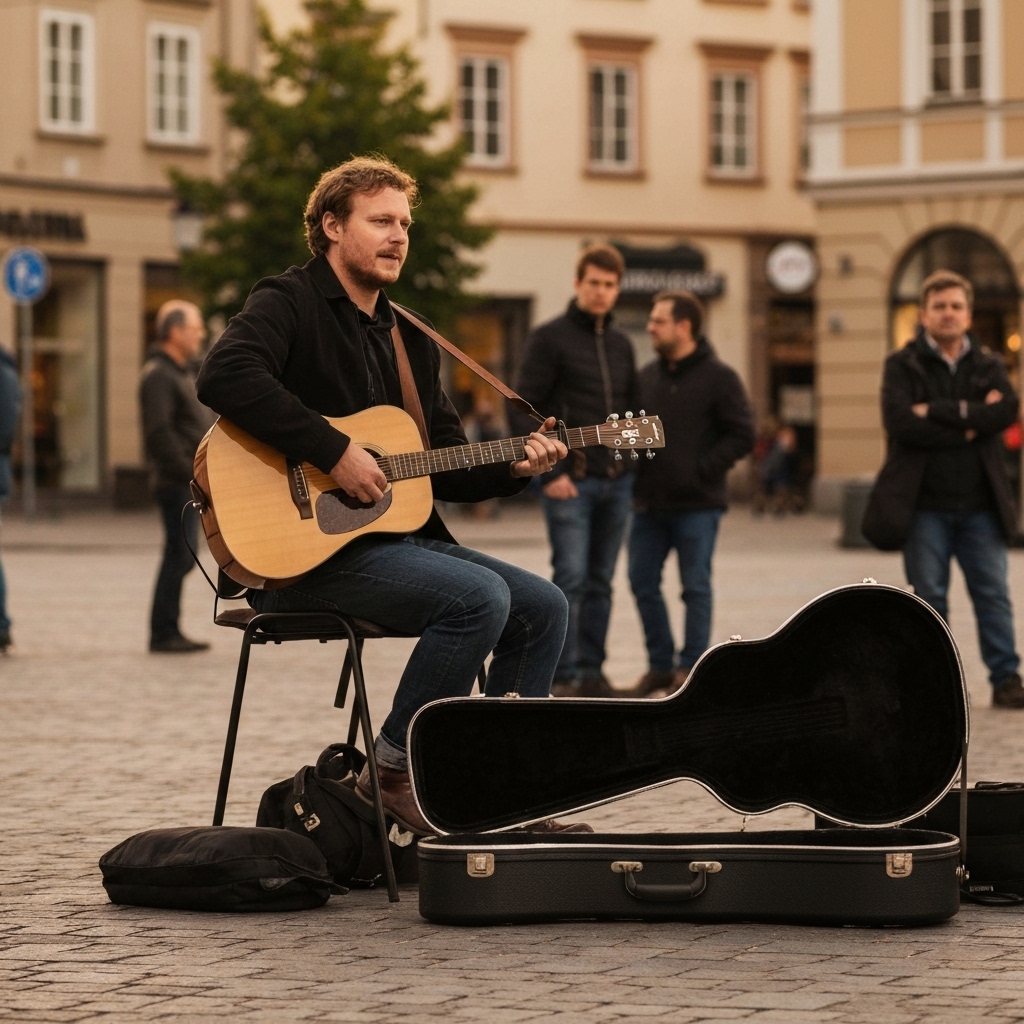
You need to focus intensely on what you do best rather than experimenting with new, unpolished material. According to Backstage, your pitch is where you showcase your mastery, not where you practice scales. If you are a guitarist who struggles with vocals, playing instrumental virtuoso pieces will likely earn you more than singing off-key.
Play to your strengths.
Practice your material thoroughly before you ever step onto the pavement.
Every moment you're fumbling for a chord or trying to remember lyrics is a moment you've lost that connection with a potential tipper. The goal is to sound incredible from start to finish.
Any time you spend just sounding "okay" is money walking right past you.
And like the folks at World Folk say, consistency is everything, because you just never know who might be walking by. Want to really elevate the show?
Think about collaborating.
A solo act is great, but a duo often draws a larger crowd because the dynamic between two performers is visually interesting.
If you are a juggler, find a musician to provide a live soundtrack.
If you play the violin, find a percussionist. Filling the gaps in your own skillset with a partner can transform a sidewalk performance into a spectacle that demands attention.
2. Choose Your Performance Location Strategically
Location is everything in real estate, and it is everything in busking.
You could be the greatest magician on earth, but if you are performing in a deserted alley, your tip jar will remain empty.
Finding the right spot is the second critical component of How to Get Tips as a Street Performer: 5 Steps to Earn More.
Your "pitch," which is industry slang for your performance spot, acts as the primary driver of your earnings.
You need high foot traffic, but you also need the *right kind* of traffic. Think about it: who’s more likely to stop?
Stressed-out commuters rushing for a train at 8 a.m., or relaxed tourists wandering downtown at 7 p.m.?
Big Notes Get Votes highlights that researching local regulations is vital. Getting shut down by the police for busking in a restricted zone kills your earnings instantly.
Understand the acoustics and the flow of the crowd.
A narrow street might offer great acoustics for an acoustic guitarist, while a large square is better for a circle show involving acrobatics. You need a spot where people can actually stop and watch without getting in everyone else's way. Block the sidewalk, and you're just a nuisance, not an attraction.
It's also true that different spots work for different kinds of shows. A simple 'walk-by' act might work in busy hallways, but a 'circle show' is where you can really bring in the cash.
That's when you build a crowd around you and hit them with a solid 20-minute performance. According to The Broke Backpacker, stoplight performances are another niche tactic where you perform for cars at red lights. This allows you to work a captive audience, though it requires high energy and legal clearance in your city.
3. Encourage Audience Engagement and Create Social Proof
Passivity is the enemy of the busker.
If people watch you like they watch a television screen, they will walk away when the commercial break comes. To earn money, you must break the fourth wall.
Engaging with your audience turns them from observers into participants.
Start by making eye contact. Smile at the people stopping to listen.
If you are a musician, invite them to clap along or sing a chorus.
If you are a comedian or magician, pull someone from the crowd to help you. When you invite viewers to participate, you are building a relationship. People tip people they like and feel connected to.
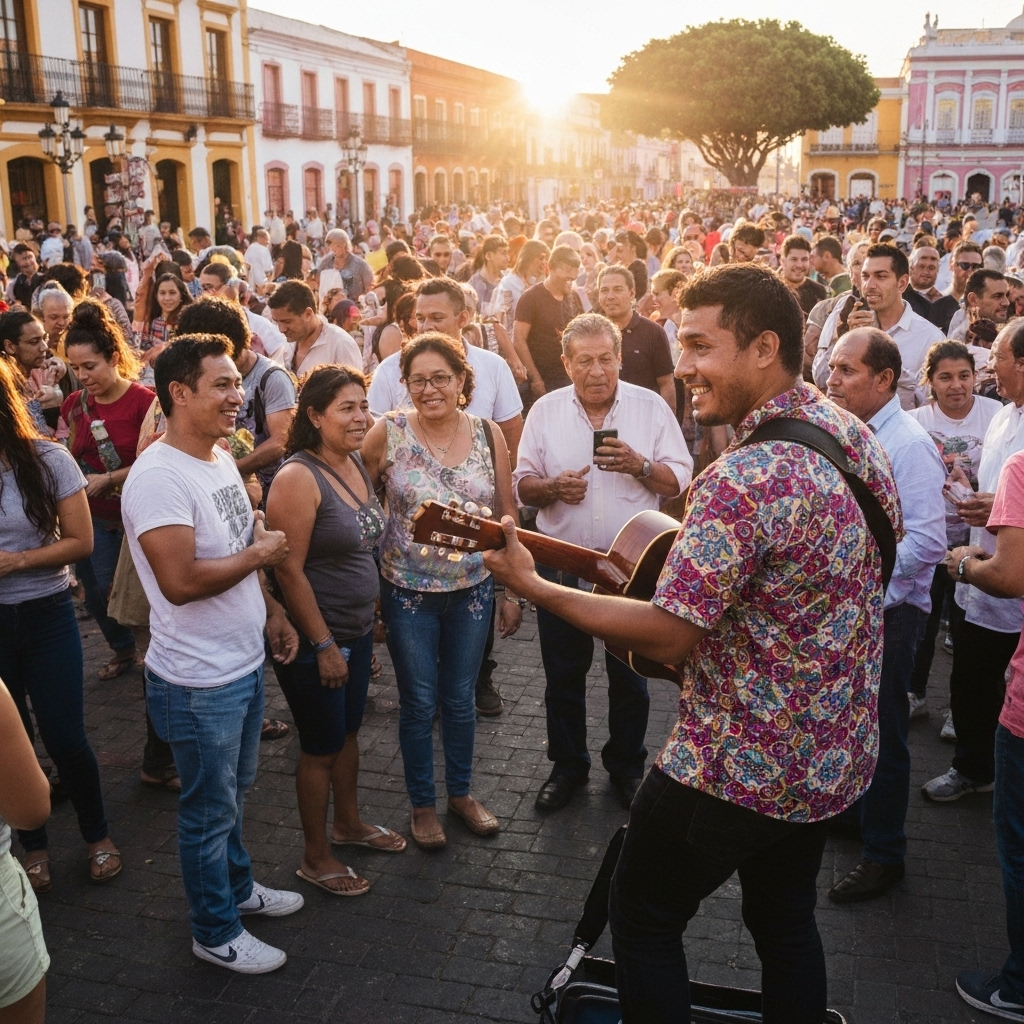
There is a psychological concept called social proof that you must leverage. When passersby see a crowd cheering and clapping, they assume something valuable is happening. You need to encourage that applause.
Lewis Howes suggests that when people see others engaging, it signals that it is acceptable for them to do the same. Applause draws more people, and a larger crowd creates a higher perceived value of your performance.
Improvisation is your best friend here. If a dog barks, incorporate it into the song.
If a siren passes, make a joke. Reacting naturally to the environment shows you are sharp and present.
If you are genuinely having fun, the audience will mirror that energy. A happy audience is a generous audience. Remember, you are hosting a party on the sidewalk; you are the host, not just the background noise.
4. Make It Easy for People to Tip You
This is the most critical logistical step in learning How to Get Tips as a Street Performer: 5 Steps to Earn More. You have the crowd, you have the talent, and they are entertained. Now, how do they pay you?
If you make it difficult or unclear, they will keep walking.
First, look at your physical collection method. A generic plastic jar is functional but boring.
Use something creative that matches your act.
A guitar case for a musician, a top hat for a magician, or a vintage suitcase for a retro band.
It adds to the aesthetic. Furthermore, you must "seed" your tip jar. Put a few bills and coins of your own in there before you start.
People are sheep; they are significantly more likely to tip if they see that others have already done so.
The Cashless Revolution: Why You Need a QR Code
Here’s the hard truth: hardly anyone carries cash anymore.
We see it all the time—artists losing 30-50% of their potential earnings just because a fan says, 'You're amazing, but I don't have any cash!' You've got to fix this problem, and fast. The easiest way is with a clear sign that shows your digital payment options.
Sure, you can list your Venmo, CashApp, or PayPal, but let's be honest: nobody wants to stand on a busy street trying to type in a username. It's awkward and slow.
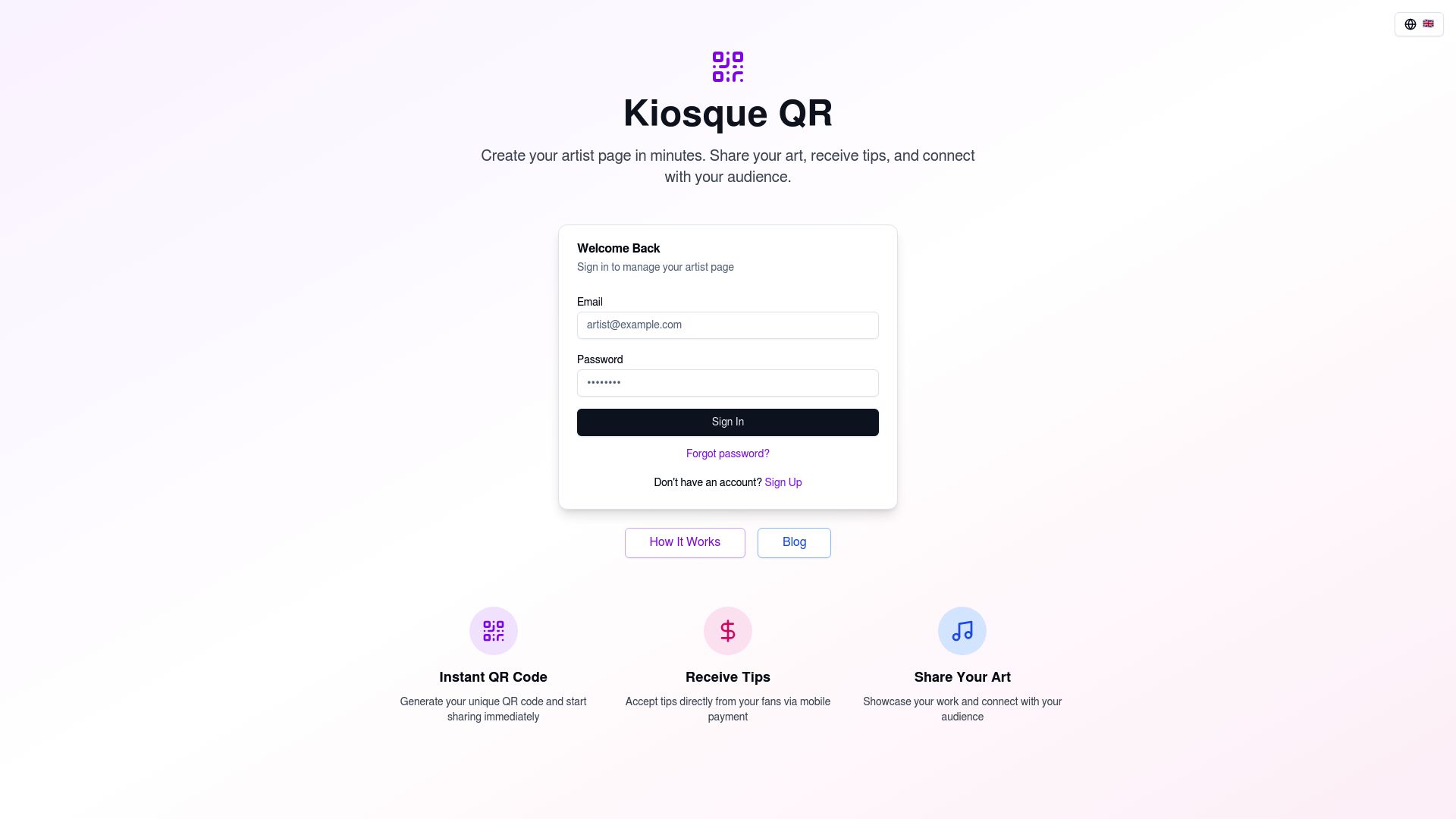
This is where Kiosque QR becomes your strongest asset. By generating a single QR code, you allow the audience to scan and tip in seconds via their mobile phone.
With Kiosque QR, you are not just asking for a chaotic transfer; you are directing them to a professional artist page. It works like this:
- The Scan: Fans point their camera at your sign.
- The Page: They instantly see your bio, your social links, and a big "Tip" button.
- The Payment: They pay via PayPal or card quickly.
It is simpler than a website and faster than typing a username. Digital savvy audiences expect this convenience.
If you incorporate a "hat pass" where you walk through the crowd, having a large printed QR code on the hat itself is a brilliant move to capture the digital tippers.
5. Consider Selling Related Products
Once you’ve secured the tip, think about the upsell. Seriously, selling your own merch is a huge way to boost what you earn from each person.
A tip might be a dollar or two, but selling one thing can bring in $10 or $20 from a single fan. As long as you're legally allowed to, selling things like CDs, t-shirts, stickers, or download cards can completely change the game.
Think about it: one $10 CD sale brings in five to ten times more than the change people usually drop in the hat. It transforms your listener into a customer.
It creates a transaction that feels equal; they get a souvenir, and you get a substantial contribution.
Merchandise also provides longevity to your fan connection. A customer who buys your CD takes your voice home with them. They are more likely to recognize you if they encounter you performing again.
They become repeat customers.
Think of it as marketing that pays you. Just make sure to check your local laws on selling stuff, because some cities have different rules for 'donations' versus 'vending.'
The Economics of Street Performance
So, what can you realistically make?
Experienced performers can earn between $90 and $150 an hour on a good day.
Of course, that number can swing wildly depending on the five steps we just covered. To keep your earnings safe, make a habit of emptying the small change from your tip jar. A full jar looks great and encourages more tips, but an overflowing one is a target for thieves.
Just tuck away the bulk of it and leave enough in there to show that other people have been tipping. When you put all this together—nailing your performance, finding the perfect spot, connecting with the crowd, making digital tips easy with tools like Kiosque QR, and selling merch—you stop being just a performer and start becoming a real business owner.
FAQ: Street Performance Tips
Do I need a license to perform on the street?
In many cities, yes.
Public spaces are regulated, and you may need a busking permit. Always check with the local city council or municipal website to avoid fines or being shut down.
How do I ask for tips without being annoying?
Humor works best. You can use signs that say "Rent Fund" or "Beer Money" to keep it light.
Verbally, thanking the audience for supporting independent art is a classy way to remind them that this is your job.
Is a QR code really necessary for busking?
Absolutely.
As we move toward a cashless society, a QR code acts as your digital credit card terminal. Services like Kiosque QR make this easy by combining your payment link and social media into one scan.
What is the best time of day to busk?
It depends on your location. Lunch hours (12 PM, 2 PM) are great for business districts, while evenings (6 PM, 10 PM) are better for entertainment districts and tourist areas.
Ready to modernize your street act?
Create your free Artist Page on Kiosque QR today and start turning every scan into support.