
5 Ways to Support Artists Without Cash App
You have just finished an incredible set. The energy in the room is electric.
The guitar notes are still ringing in the air, and you can see people reaching for their wallets. Then comes the inevitable question from a fan in the front row regarding how they can give you a tip.
They want to support you, but there is a catch. They do not have cash, and they do not use Cash App.
This scenario happens more often than you might think. While Cash App is popular in certain circles, relying on it exclusively leaves money on the table. If you want to maximize your income and allow your fanbase to support artists without cash app restrictions, you need to diversify your payment options.
It is about removing friction. When a fan wants to give you money, the process should be instant and seamless.
So, let's dive into the best alternatives out there. Honestly, the world of mobile payments for artists has exploded, from simple QR code generators that are like digital business cards to full-on virtual tip jars. It doesn't matter if you're a street performer, a touring musician, or a digital illustrator—getting your payment setup sorted is just as crucial as nailing your performance.
We see a massive shift in how audiences interact with creators.
They want to support you. They want to buy you a coffee or drop a few dollars for that song request. But if you make them download a new app to do it, they won't.
You are about to learn how to bridge that gap technically and practically.

The Problem with Single-App Dependency
Let's support artists without cash app limitations by understanding why relying on one platform is risky. Cash App is a fantastic tool for peer-to-peer transactions in the United States and the UK.
However, it is not universal. If you have international fans or an older demographic in your audience, they likely use PayPal, Venmo, or simply their credit cards.
The digital tipping market is fragmented. Depending on a single app creates a bottleneck. Imagine a fan holding a ten-dollar bill but the jar is sealed shut.
That is what happens when a digital wallet isn't compatible with your setup. You need a universal key.
Security is another factor.
Artists need platforms that prioritize data ownership and tax reporting. Using a personal Cash App handle can clutter your personal finances with your business income. Dedicated tools often provide analytics, so you know exactly which gig generated the most tips.
This data is gold for planning your next tour or release.
QR Code Platforms: The Bridge Between Stage and Screen
The most effective way to support artists without cash app during a live performance is through QR codes. These little black-and-white squares have revolutionized street performance and venue merchandising. Your fans don't have to type a thing.
They just scan it, tap a button, and pay you.
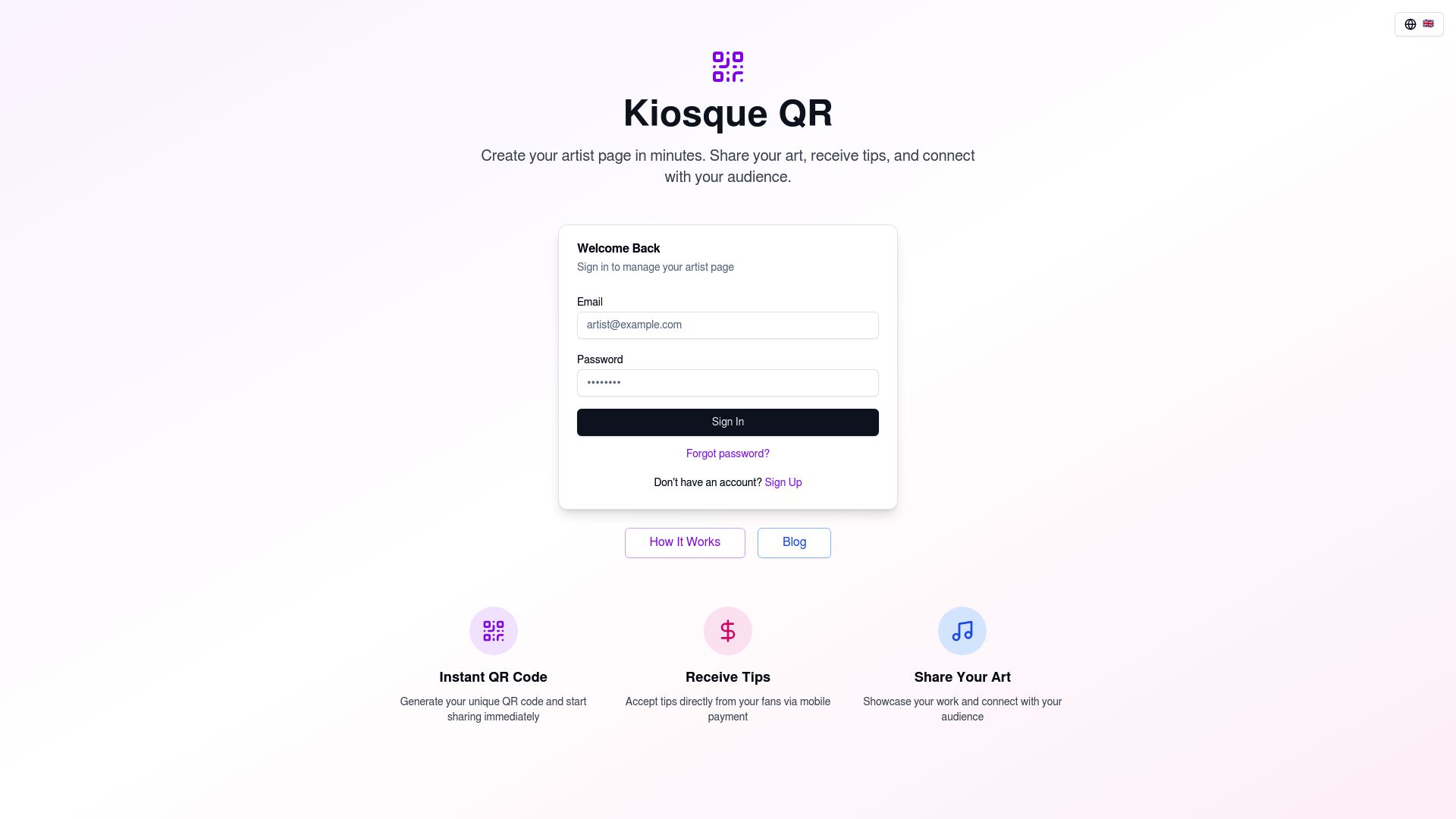
Kiosque QR: Your Digital Artist Identity
We actually designed Kiosque QR for this exact situation. But it’s not really just about getting paid.
It’s about giving them some context. When a fan scans your Kiosque QR code, they're taken to a personalized page all about you. Think of this page as your central hub.
It's got your bio, all your social media links like Instagram and TikTok, and of course, your tip options.
The Premium version integrates a "Tips" button directly linked to your PayPal.me (or similar universal links).
This means you can accept payments from almost anywhere in the world without the fan needing to download a specific app. They likely already have a PayPal account or can use guest checkout.
Here is why this matters. You create your page in under a minute without any coding skills.
You print out the unique QR code on a sticker for your guitar case or a poster for the merch table. You turn a fleeting interaction into a long-term connection.
The fan tips you now, but they also follow you on Spotify because the link was right there next to the payment button.
The bottom line is that artists, musicians, and performers can totally get tips without Cash App by using secure QR code-based platforms like ours that are built around making things easy for fans.
You hold the controls.
TipTree.io: Aggregating Your Options
TipTree is another really solid option in this space. TipTree's whole angle is aggregation—it lets you pull Stripe, Venmo, and PayPal together under one single QR code.
What's great is that this gives your fan the final say. If they're all about Venmo, they just tap Venmo.
If they have their credit card ready, they can use Stripe.
What makes TipTree pretty cool is that it lets fans tie song requests to their tips. Someone can send you $5 and ask for "Wonderwall"—and hey, please don't play Wonderwall, but you get the point. This kind of direct interaction makes tipping feel more like a fun game.
TipTree also makes a big deal about you owning all your data, so you get the email addresses of your supporters—which is absolutely golden for building a newsletter down the road.
PickleJar: The Fan Engagement Specialist
If you're playing in venues a lot, you've probably come across PickleJar. They are making waves, especially in the country music scene. Their selling point is bold: they allow artists to keep 100% of the tips.
They make their money elsewhere in the ecosystem, ensuring the artist gets the full dollar amount thrown in the virtual hat.
PickleJar offers features like VIP rewards and potential fan notifications for upcoming shows.
It is less of a simple tool and more of a platform.
It is a robust option if you are looking to build a community inside a specific app ecosystem, though it sometimes requires more buy-in from the fan side compared to a simple web link.
SmartTip and eTip: The Professional Solutions
For those managing bands or crews, SmartTip offers a unique feature: split payments. You can distribute tips to performers, venues, or crew members automatically. This transparency is great for larger ensembles where splitting cash at the end of the night is a headache.
Similarly, eTip.io focuses heavily on app-less experiences. They handle tax reporting and secure transactions very well. If you are treating your art strictly as a business and need high-level compliance and reporting, these platforms are worth investigating.
Comparative Analysis of QR Platforms
To help you decide, let's look at how these platforms stack up against each other. Choosing the right one depends on your specific needs regarding support artists without cash app.
| Platform | Key Payments (Non-Cash App) | No Fan App Required | Best Artist Features |
|---|---|---|---|
| Kiosque QR | PayPal (via Link) | Yes | All-in-one Hub, Analytics, Social Growth |
| TipTree | Stripe, Venmo, PayPal | Yes | Song Requests, Data Ownership |
| PickleJar | Various | Yes | 100% Tips kept, Livestream tools |
| SmartTip | Various | Yes | Splitting tips with band/venue |
Virtual Tip Jars: The Online Approach
When you are not performing live, or if you are streaming from a bedroom studio, you need a virtual tip jar.
These are URLs you drop in your chat, bio, or video description. They function beautifully to help fans support artists without cash app.
Ko-fi: The Friendly Low-Pressure Option
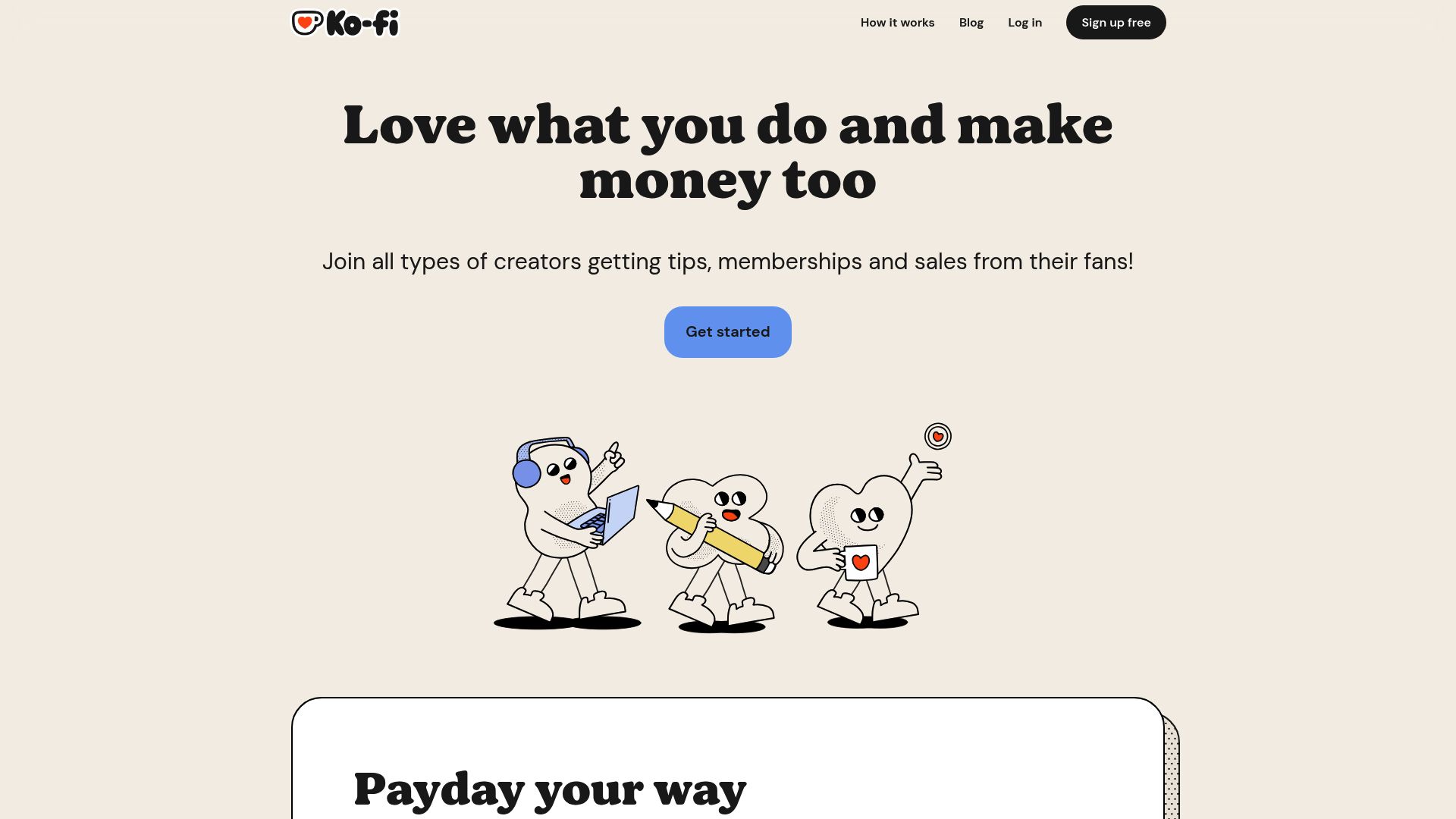
Ko-fi has become a darling of the creative world. The premise is disarmingly simple: "Buy me a coffee." It reframes the transaction from a "donation" (which sounds like charity) to a friendly gesture. It lowers the psychological barrier for the fan.
Ko-fi started as a simple, free tip jar for one-off donations, but it's grown into so much more. Now you can sell commissions, offer memberships, and even sell products right on the platform. It's amazing how flexible these platforms are—some creators are even pulling in over $100k+ in donations.
And unlike Patreon, you don't feel that constant pressure to churn out new content every month. You get a tip, you say thanks. Pretty simple, right?
Zink.tips: The Micro-tipping Powerhouse
Zink.tips is a fascinating one because it really lowers the barrier to entry. It lets people give micro-tips, we're talking as little as five cents.
That might not sound like much, but when you're live-streaming to thousands of people, that volume really adds up. If everyone throws in a quarter, you're suddenly making some decent cash.
It also plugs right into platforms like YouTube and Cameo and handles both regular dollars and crypto.
And that crypto part is a pretty big deal.
We're seeing more and more tech-savvy artists start to accept it as a way to dodge those annoying traditional banking fees. Zink is what makes that connection possible.
PayPal.me: The Established Giant
And of course, we can't ignore the elephant in the room. Look, a custom PayPal.me link is often just the easiest way to go. Almost everyone has a PayPal account already.
You just create your link (like paypal.me/YourBandName), share it, and you're good to go.
People recognize it and trust it.
The only real downside is that it feels a bit...
corporate. It doesn't have the friendly vibe of a Ko-fi page or the visual punch of a Kiosque QR profile. It's all business, really.
However, for a quick and dirty solution to PayPal.me vs Stripe for artists discussions, PayPal often wins on consumer familiarity.
Luis Cortes / Unsplash
Subscription and Community Platforms
Tipping is great, but recurring revenue is the holy grail.
Converting a designated tipper into a subscriber stabilizes your career. This moves beyond just "support" and into "patronage."
Patreon: The Heavyweight
Patreon changed the game.
It allows fans to subscribe to you for a monthly fee in exchange for exclusive content. This could be behind-the-scenes footage, early ticket access, or exclusive demos.
It is ideal for established creators who can commit to a content schedule.
However, be warned. Patreon is a job.
You need to service your subscribers. If you just want a passive way to receive money like a tip jar, Patreon might be overkill.
But for building a salary, it is unmatched.
Tipeee: The European Alternative
If you are based in Europe or have a large European following, Tipeee is a strong competitor. It has a lot of the same features as Patreon, but it also lets people give one-off tips, which makes it super popular with streamers and comic artists.
Plus, it often hooks you up with rewards like access to a Discord server, which is massive for building a real community. And it's not just a US/Europe thing. Platforms like Show Love (through Selar) are popping up for African creators, using stuff like Apple Pay and global bank transfers.
It just goes to show you the world is moving beyond US-only apps.
Mobile Payment Solutions for Artists: PayPal vs. Stripe
Alright, let's get a little technical for a second. When you set up these platforms (like Kiosque QR or TipTree), you often have to connect a payment gateway. The two big comparisons are usually PayPal.me vs Stripe for artists.
Stripe
Stripe is a developer favorite. It processes credit cards directly. When a fan tips you via a Stripe-connected form, it looks like a regular online purchase.
The fees are standard (usually around 2.9% + 30 cents).
- Pros: Professional look, money goes straight to your bank, accepts Apple Pay/Google Pay seamlessly.
- Cons: It's tougher to set up on your own if you don't have a platform doing the heavy lifting for you.
PayPal
PayPal, on the other hand, is a wallet.
The money just parks itself in your PayPal account until you decide to move it.
- Pros: People trust it, big time. People just feel safe when they see that PayPal button.
- Cons: The catch? They can be quick to freeze your funds if they see what they call "suspicious activity" (like getting a sudden ton of tips after a slow spell), and their fees for international transfers can be all over the place.
Our recommendation?
Use a platform that offers both, or at least use a Kiosque QR page where you can update the link behind the button anytime.
If PayPal goes down, swap it for a Stripe payment link in seconds.
Strategies to Convert Fans into Tippers
Having the tools is one thing.
Getting people to use them is another. You need to reduce the friction to zero. Here is how you do it utilizing the technology we discussed.
The Physical Placement
Do not hide your QR code. If you are a street performer, print it on an A4 card and laminate it.
Place it inside your guitar case and on a stand. If you are in a venue, ask the bar if you can put small table talkers with your code on them.
Use clear calls to action. Don't just put the code. Write "Support the Music, Scan to Tip" or "Don't use Cash App?
Scan here for PayPal/Card." This directly addresses the query of support artists without cash app.
The Verbal Call Out
You have to ask.
It feels awkward at first, but it is necessary. "If you enjoyed this set and want to support independent art but don't carry cash, you can scare the QR code right here.
It accepts everything." Make it a joke.
Make it light. But say it.
The Digital Real Estate
Your social bio is prime real estate. Do not clutter it.
Use a link-in-bio tool (like your Kiosque QR page) that leads immediately to the tipping option. If a fan has to click three times to find the tip jar, you have lost them.
Rombo / Unsplash
Why Simplicity Wins
You might be tempted to offer ten different options: "I have Cash App, Venmo, Zelle, PayPal, Bitcoin..." Stop. It creates decision paralysis.
This is why we advocate for the landing page approach. Give them ONE QR code or ONE link. Once they are on that page, then present the options clearly.
"Pay with Card" or "Pay with PayPal."
Kiosque QR excels here because it simplifies the entry point. The audience remembers "Scan the code." They don't need to remember your username.
They scan, they see your face, they pay. It establishes authority and trust versus a random Venmo handle written on a chalkboard.
Conclusion
The days of relying solely on loose change or a single app like Cash App are over.
The world is too connected and payment methods are too varied to limit yourself. By diversifying how you accept support, you are not just asking for money; you are treating your art as a professional service accessible to everyone.
So whether you end up going with the community vibe of Ko-fi, the data-heavy approach of TipTree, or the slick, all-in-one simplicity you get with Kiosque QR, the goal is always the same: just make it dead simple for your fans to show their appreciation. Don't let a little tech stand between you and your earnings. Set up your page, print out that code, and just go play your heart out.
Believe me, your audience wants to support you—you just have to give them an easy way to do it.
Ready to modernize how you receive tips?
Create your free artist page today with Kiosque QR and start turning your audience into a sustainable community.
FAQ
What is the best alternative to Cash App for musicians?
PayPal.me and Stripe are the most universal alternatives. However, using an aggregator like Kiosque QR or Linktree allows you to offer multiple payment methods through a single link.
Can I use a QR code to receive tips?
Oh, absolutely.
That’s what platforms like Kiosque QR are for—they generate a unique code just for you. When fans scan it, it takes them right to a mobile-friendly page where they can tip you however they want.
Is PayPal or Stripe better for artist tips?
PayPal is usually easier for the fans because everybody knows the name. Stripe can be a better deal for you, the artist, because of its professional fee structure and direct bank deposits, but it does take a little more technical know-how or a platform to handle the setup for you.
How do I ask for tips without being annoying?
Place clear signage with a QR code visible during your performance. Verbally mention it once or twice during a set as a way to "support the art" rather than just asking for money.
Most fans are happy to support if the method is easy.