Easy Artist Networking Platform: 3 Ways to Connect
You have just finished a masterpiece. Maybe it is a new song, a series of digital illustrations, or a fresh street performance set.
The creative part is done, and now comes the silence. This is where the panic usually sets in for creators.
You know you need to get your work out there, but the digital landscape feels like a crowded room where everyone is shouting.
You start looking for an easy artist networking platform that can help you cut through the noise without requiring a degree in marketing.
The reality is that talent alone is rarely enough in the modern creative economy. We see incredible artists stay invisible simply because they dread the idea of "networking." It feels transactional. It feels fake.
But it does not have to be that way.
Networking is really just finding your people. It is about connecting with fans who actually want to support you and peers who understand the grind.
Finding the right easy artist networking platform isn't about choosing one magic app that does everything. Research suggests that the most successful beginners use a "stack" approach.
You combine a major social platform for broad reach with a niche community for deep connections.
Then, you need a way to tie it all together so you can actually get paid and followed. This is where tools like Kiosque QR come into play, serving as the bridge between your physical performance and your digital presence.
We are going to break down the best platforms available right now.
We will look at them through the lens of a beginner who wants results without the headache. Whether you are a painter, a busker, or a digital designer, there is a space for you to grow.
Why You Need an Artist Networking Strategy
Many beginners make the mistake of trying to be everywhere at once. You sign up for five different apps, upload a profile picture, and then burn out within a week comfortably. That is not a strategy.
That is just exhaustion. The goal of an easy artist networking platform is to simplify your life, not complicate it.
You need to focus on where your actual audience hangs out.
Igor Omilaev / Unsplash
Think of your digital presence like a gallery opening or a concert. You wouldn't invite people to five different venues on the same night.
You would pick the best venue for your style. If you are a visual artist, you need a visual medium. If you are a musician, you need audio and community interaction.
The tools we will review help you build that specific venue online.
It is also crucial to remember that platforms change. Algorithms shift.
What worked five years ago on Facebook doesn't work today. That is why having a central hub, like a personal Kiosque QR page, acts as your anchor.
No matter which networking app is trending, your QR code and landing page remain yours. It is your digital business card that never goes out of style.
1. General Social Platforms: The Broad Reach
These are the giants.
You probably use them personally, but using them as an artist requires a different mindset. You aren't just scrolling; you are broadcasting.
Instagram: The Visual Standard
Best for: Visual artists, musicians, and performers who share photo/video content.
It is almost impossible to talk about an easy artist networking platform without mentioning Instagram. For better or worse, it remains the standard portfolio for current creatives.
The grid layout functions as an instant gallery. When you meet a gallery owner or a potential fan, they will likely ask for your Instagram handle before they ask for your website.
For beginners, the barrier to entry is low.
You likely already have the app on your phone. The networking magic here happens in the non-obvious places.
It is not just about posting your art.
It is about the Stories and the Direct Messages (DMs). Stories allow you to show the "messy" side of your process.
This humanizes you. People love to see a sketch in progress or a musician tuning their guitar. It lowers the intimidation factor and invites conversation.
To network effectively here, you need to be active in the comments.
We don't mean posting fire emojis on celebrity accounts. We mean finding peers who are at your level or slightly above, and engaging with their work meaningfully.
According to Arts To Hearts Project, treating your grid as your portfolio and your interactions as your networking events is the key to growth. You build relationships by being a good digital neighbor.
TikTok: The Viral Engine
Best for: Musicians, process-oriented artists, and performers.
If Instagram is a polished gallery, TikTok is a loud, busy street festival. This is currently the top app for independent artists looking for rapid growth.
The algorithm here is unique because it doesn't care how many followers you have.
It cares if your content is engaging right now.
For a beginner, this is liberating. You can post a video of you painting or singing, and if it hooks people in the first three seconds, it can reach thousands of potential fans overnight.
The networking here is different.
It is less about DMs and more about "Duets" and "Stitches." You can collaborate with a musician on the other side of the world by simply playing along with their video.
It creates an instant visual bond.
Industry scouts are increasingly using TikTok to find new talent. They want to see does this artist have charisma?
Do people react to them?
Venice Music notes that labels and diverse bookers look at audience reaction here as a metric for potential success. The challenge is consistency. You need to feed the beast constantly, which can be draining if you don't have a plan.
Pinterest: The Long-Game Discovery
Best for: Illustrators, designers, and visual creators.
People often forget Pinterest, but they shouldn't.
It functions more like a search engine than a social network. This makes it a surprisingly easy artist networking platform for introverts. There is no pressure to be "charming" on camera.
You don't have to dance or point at text bubbles. You just pin your high-quality work with the right keywords.
The networking here is passive but powerful.
Your artwork might be pinned to a "Concept Art Inspiration" board by an art director at a major studio. Months later, they trace that pin back to your website or portfolio. It is a slow burn.
The content you post today can drive traffic to your specialized links for years. This is excellent for driving traffic to your Kiosque QR page where you can actually capture their email or sell your services.
2. Art-Specific Platforms: Serious Peers Only
While the big apps give you reach, niche platforms give you credibility. This is where you go to get respect from other artists and find professional work.
Behance: The Professional Showcase
Best for: Graphic designers, illustrators, and digital artists.
Behance is owned by Adobe, and it is built for case studies.
You don't just post a picture of a logo you made. You post the sketches, the color palette, the rejected concepts, and the final application. It tells the story of your brain.
This is an easy artist networking platform for finding corporate clients. Art directors browse Behance specifically to find talent for projects.
If your work gets "Featured" in one of their curated galleries, your inbox can flood with opportunities very quickly. The networking aspect involves appreciating other projects and following leading creatives.
It is a very professional environment, much different from the casual nature of TikTok.
ArtStation: The Entertainment Industry Standard
Best for: Game artists, concept artists, 3D modelers.
If you want to work regarding video games or movies, you need an ArtStation profile. It is non-negotiable. This platform is the standard portfolio site for the entertainment industry.
The bar here is high, which forces you to level up your work. Recruiters from studios like Ubisoft or Blizzard are known to headhunt directly from the trending page.
Networking on ArtStation is about visibility in specific niches. If you do "Environment Art," you interact with other environment artists.
You comment on their lighting techniques or their texture work.
It is technical networking. You establish yourself as an expert by knowing what you are talking about in the comment sections.
It connects you with the people who might hire you one day.
3. The Musician and Performer Pivot
Musicians have slightly different needs. You need audio quality and a way to monetize fandom directly. Visuals are important, but the sound is king.
YouTube: The Deep Dive
YouTube is a search engine, a social network, and a TV station all in one.
For musicians, it is the best place to host your full performances. While TikTok is for 15-second clips, YouTube is where fans go when they really want to listen to you.
It builds a deeper connection.
Networking happens through collaborations. You cover another YouTuber's song, tag them, and start a conversation.
Or you do a joint video. The comment section on YouTube is also a community forum. Replying to comments here is essential for building that core group of "super fans" who will buy your merch and come to your shows.
Twitch: Live Interaction
Live streaming has exploded for musicians.
Twitch allows you to perform live from your bedroom and get tips in real-time. It is an incredible easy artist networking platform because the barrier between you and the audience is zero. You are talking to them while you tune your instrument.
This builds intense loyalty. Regular viewers become friends with each other in the chat.
You really do become the host of a digital party.
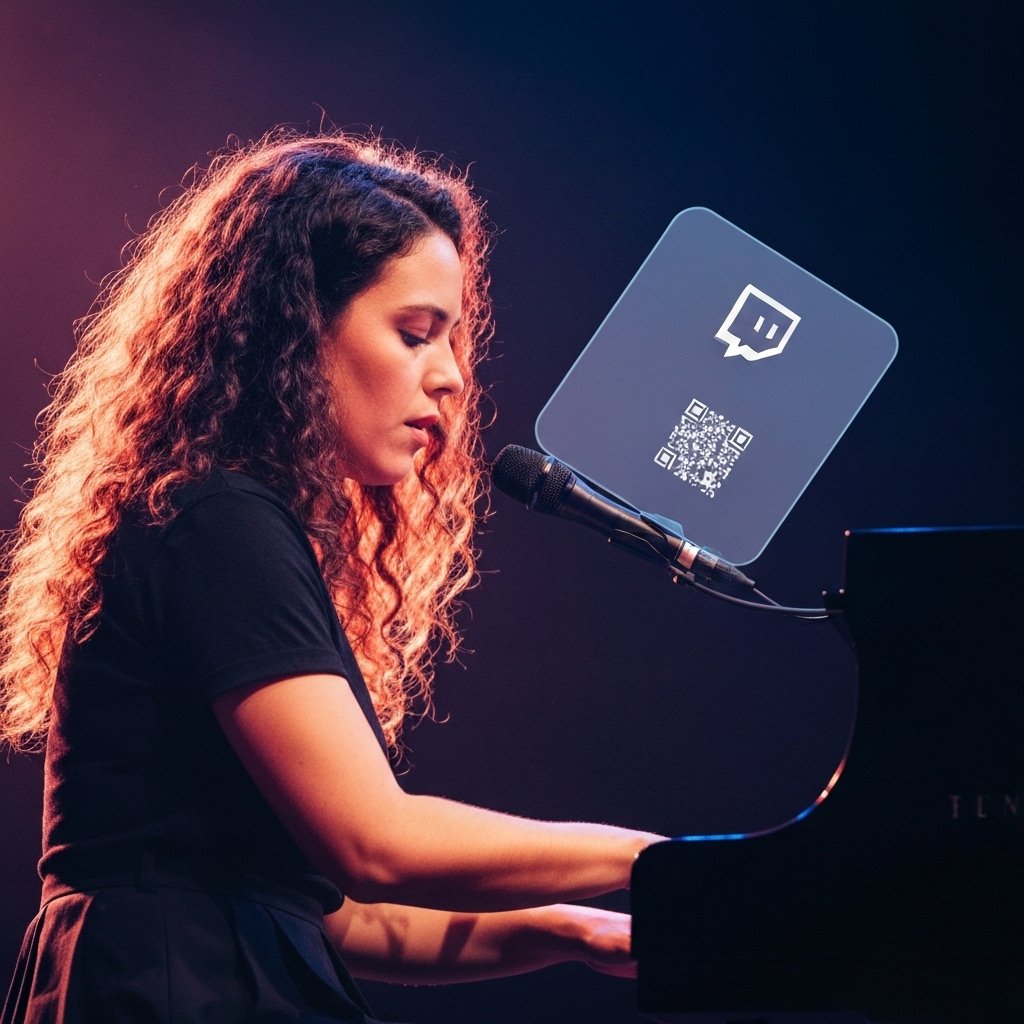
And yeah, monetization is built-in with subscriptions and bits, but tons of artists also take the chance to display a QR code on screen—which is a perfect use for your Kiosque QR profile—letting casual viewers easily send a tip via PayPal or follow your other socials without having to type some long, clunky URL.
4. The Bridge: Connecting Offline to Online
Here is the problem with all the platforms we just listed: they trap you inside their ecosystem. Instagram wants you to stay on Instagram.
TikTok wants you to stay on TikTok. But as an artist, you exist in the real world too.
You perform on streets, in cafes, at gallery openings, and in small venues.
How do you move a person who sees you live onto these digital platforms?
You need a bridge. This is arguably the most critical part of your "networking stack."
The Comparison: Websites vs. Smart Pages
Traditionally, artists thought they needed a massive website.
You would spend weeks coding or thousands of dollars paying a developer. Then you would end up with a clunky site that nobody visits. Today, the trend is moving toward "Smart Pages" or "Link-in-bio" tools.
This is where specialized services excel. Kiosque QR, for example, is designed specifically for this gap.
It acts as an artist social media linking platform free of the complexity of WordPress. You create a page in one minute. It houses your Instagram link, your TikTok, your YouTube, and a payment button.
Why Simplicity Converts
Imagine you are a street performer. You have 30 seconds of a passerby's attention. You cannot shout "Visit my website at www dot my name dot com slash music." They will walk away.
But if you have a QR code printed on a sign that says "Scan to Support," they can pull out their phone, scan it, and land on a page that gives them exactly what they need.
This is "networking" in its purest form. It connects the physical moment to the digital relationship.
You convert a stranger into a follower instantly. This is the missing link for many beginners who have great content online but struggle to get real-world audiences to see it.
5. Curated Platforms: The Next Level
Once you have your socials running and your bridge established, you can look at curated platforms.
These are not really "social" in the traditional sense, but they are powerful networking tools for serious artists.
Editorial Visibility
Platforms like Munchies Art Club or Contemporary Art Daily function as digital magazines. Being featured here is a stamp of approval. It tells critics and collectors that you are "one to watch."
You don't just sign up for these. You have to submit work or be scouted.
But following them is a form of networking. You see what curators are looking for. You learn the language of the high-art world.
Munchies Art Club highlights that these platforms connect you with gallerists rather than just casual fans.
Strategy for Beginners
Don't obsess over these yet.
Keep them on your radar.
Follow their open calls. Submit work when you have a strong portfolio ready. Think of these as the "goal" platforms while you grind on Instagram and ArtStation to build your base.
6. Creating Your Beginner Networking Strategy
We have covered a lot of apps. It can feel overwhelming.
So let's simplify it into a concrete plan you can start today. You don't need to work 24/7.
You just need to be smart.
The 1-2-1 Rule
Experts often recommend a focused approach to avoid burnout. A good easy artist networking platform strategy focuses on depth, not width.
- 1 Mainstream Platform: Pick one big app for reach. Usually Instagram or TikTok. This is where you cast a wide net.
- 1 Niche Platform: Pick one professional space. ArtStation, Behance, or LinkedIn. This is where you find work and peers.
- 1 Home Base: This is your Kiosque QR or personal landing page. This is where you own the traffic and collect tips.
The 15-Minute Habit
Networking fails when it becomes a chore. Set a timer for 15 minutes a day.
Use this time solely for engagement. Do not scroll mindlessly.
Go to hashtags relevant to your art, find 5 artists you admire, and leave genuine comments. Not "Nice!" or "Cool pic." Write something specific about their technique or the feeling the art connects with.
Then, reply to any comments on your own posts. If someone took the time to write to you, write back.
That person is a potential super-fan. This small daily habit builds a network faster than any viral video ever will.
Leveraging LinkedIn (The Surprise Contender)
We need to mention LinkedIn again because it is so underutilized by artists. It feels corporate.
It feels stiff.
But that is exactly why you stand out there.
A colorful piece of concept art or a video of a live performance pops off the screen in a sea of grey business suits.
Use LinkedIn to connect with festival organizers, gallery owners, and agency heads.
They are there. They are looking for talent.
If you position yourself as a professional creative who is easy to work with, you can secure opportunities that Instagram influencers never even see.
Real-World Application: The "Busker" Scenario
Let's paint a picture of how this easy artist networking platform ecosystem works in real life. Let's paint a picture: pretend you're a musician named Alex.
For starters, Alex records a cover song at home.
Step 1: They'll post a polished snippet on TikTok to get wide reach, and then upload the full version to YouTube for any fans who want to go deeper.
Step 2: Next up, on the weekend, Alex heads to the city center to perform live with just a microphone and a sign.
Step 3: That sign clearly displays a large QR code from Kiosque QR with the words "Request a Song & Support." Soon enough, a crowd starts to gather.
Step 4: A crowd gathers. People enjoy the music. They scan the code.
They land on Alex's page.
They see a button to tip $5 via PayPal. They also see a button to "Follow on TikTok."
Step 5: Alex goes home with $50 in digital tips and 20 new followers. Later, Alex goes on LinkedIn and posts a photo of the crowd, tagging the city council to show the cultural value they brought to the street.
A local event planner sees it and books Alex for a festival.
This is networking. It flows from digital to physical and back again. It uses tools to make the connection seamless.
Common Pitfalls to Avoid
Even with the best tools, you can mess this up. Here are the traps beginners fall into.
The "Link in Bio" Mess
You have seen profiles with a "Linktree" that has 45 different buttons. "Listen on Spotify," "Listen on Apple," "Read my Blog," "Buy my Merch," "Donate here," "Watch this." It is too much.
Analysis paralysis sets in, and the user clicks nothing.
Keep your landing page clean. Prioritize what you want people to do right now.
If you are releasing a new song, that link goes top. If you are busking, the "Tip" button goes top. Tools like Kiosque QR are designed to be visually simple for this exact reason.
Simplicity converts.
Ignoring the Data
Most of these platforms give you analytics. Look at them once a month. Which platform is driving traffic?
If you spend hours on Twitter but get zero clicks, stop using Twitter. Double down on what works.
Conclusion: Start Small, Connect Big
The world of digital promotion can feel like a second job you didn't apply for. But it doesn't have to be painful.
By selecting an easy artist networking platform that suits your personality and combining it with a smart conversion tool, you can build a career on your own terms.
Remember that every number on a screen is a real person.
Networking is just the art of saying "hello" to them. Whether you are using TikTok to reach the masses, ArtStation to impress the pros, or Kiosque QR to gather support from the crowd in front of you, the goal remains the same: Connection.
You have the art. Now you have the tools. The only thing left to do is start sharing.
Ready to turn your audience into a community? Create your free artist page with Kiosque QR today and start letting fans support you right away.
Frequently Asked Questions
What is the best easy artist networking platform for beginners?
There isn't one single "best" app, but for beginners, a combination of Instagram (for visual portfolio) and TikTok (for reach) is the standard starting point. When you pair these with a link-management tool like Kiosque QR, you get to actually steer that traffic exactly where you want it to go.
How can I network as an artist if I am shy?
What if you're too shy to network as an artist?
Honestly, platforms like Pinterest or ArtStation are great for introverts because they're all about the work, not so much about your personality.
You can also just use a QR code at live events to share your info, so you don't have to give a verbal pitch to every single person.
Is there an artist social media linking platform free to use?
Is there a social media linking platform for artists that's actually free?
Yep, Kiosque QR has a free version that lets you create an artist page, throw in all your social links, and generate your own QR code.
Do I really need a website as a beginner artist?
Not immediately. A full website can be expensive and hard to maintain.
A "Smart Page" or landing page that houses your bio and links is often enough for the first few years of your career until you have a large inventory of products or booking requirements.