
Artist Branding Without a Website: 3 Keys for Performers
You have just finished writing your best song or painting your masterpiece. The creative work is done, but now the anxiety sets in. You look around at other successful artists and they all seem to have sleek, expensive custom websites.
You might feel like you are already behind.
There is a pervasive myth in the creative industry that you simply cannot exist professionally without a dot-com domain. We often hear that a website is valid proof of your existence as a serious artist. But here is the reality check that might save you time and money.
artist branding without a website is not just possible; for many emerging artists, it is actually the smarter strategic move.
Building a website takes months of work or thousands of dollars. Maintaining it requires technical skills that take you away from your art. If you are a musician, a street performer, or a digital artist, your audience isn't typing your URL into a browser bar.
They are scrolling through apps, scanning codes at shows, and looking for instant connections.
The landscape has shifted dramatically. Your brand is no longer defined by a static page on the internet.
It is defined by the ecosystem of tools you connect together. We see artists every day who build thriving careers using nothing but a strong visual identity, a smart "link in bio" solution, and a connection to their fans.
In this comprehensive guide, we will break down exactly how to build a professional image using free and simple tools. You will learn to create a digital presence that converts casual viewers into paying fans, all without writing a single line of code.
Whether you are wondering how to create a digital business card for artists or looking for the best way to create artist profile page free of charge, this playbook is for you.
Let's dive into the practical steps that will liberate you from the pressure of web design.
1. The Foundation: Define Your Identity Before You Choose Tools
Before you even download an app or sign up for a service, you must understand who you are. A website is just a container, but a brand is the substance inside it. If you build a container without substance, it remains empty.
Many artists rush to create profiles on every new platform. However, successful artist branding without a website relies heavily on clarity. If your message is confusing, no tool will fix it.
You need to establish your "internal brand" first.
Clarify Your Narrative
Start with your name. This might sound basic, but you have to be consistent. Think about it: if you're "TheRealDJMike" on TikTok but "Michael-spins-vinyl" on Instagram, you're just making it harder for people to find you.
So, pick one name and use it everywhere.
After that, you've got to nail your "one-liner." Picture this: you're in an elevator with a venue owner.
You've got maybe ten seconds to tell them who you are. Are you an "abstract expressionist who paints urban decay," or a "stand-up comic who jokes about parenting fails"?
Write this down. It will become your bio across every platform.
Visual Values and Aesthetics
You don't need a logo designer to look professional. You just need to make choices and honor them.
Pick a color palette of one or two main colors. Choose one font for your headlines.
Use a consistent filter or lighting style for your photos.
According to branding experts at Visuable, your brand clarity matters significantly more than the platform you use.
When a fan moves from your poster to your Instagram and then to your payment link, it should feel like the same room. If the visual vibe changes, you break the trust.
This consistency creates a "virtual thread" that ties your presence together.
It mimics the cohesion of a website without the technical overhead.
2. The Hub: Create a Digital Business Card for Artists
If you don't have a website, you still need a headquarters. You need a single destination where all roads lead.
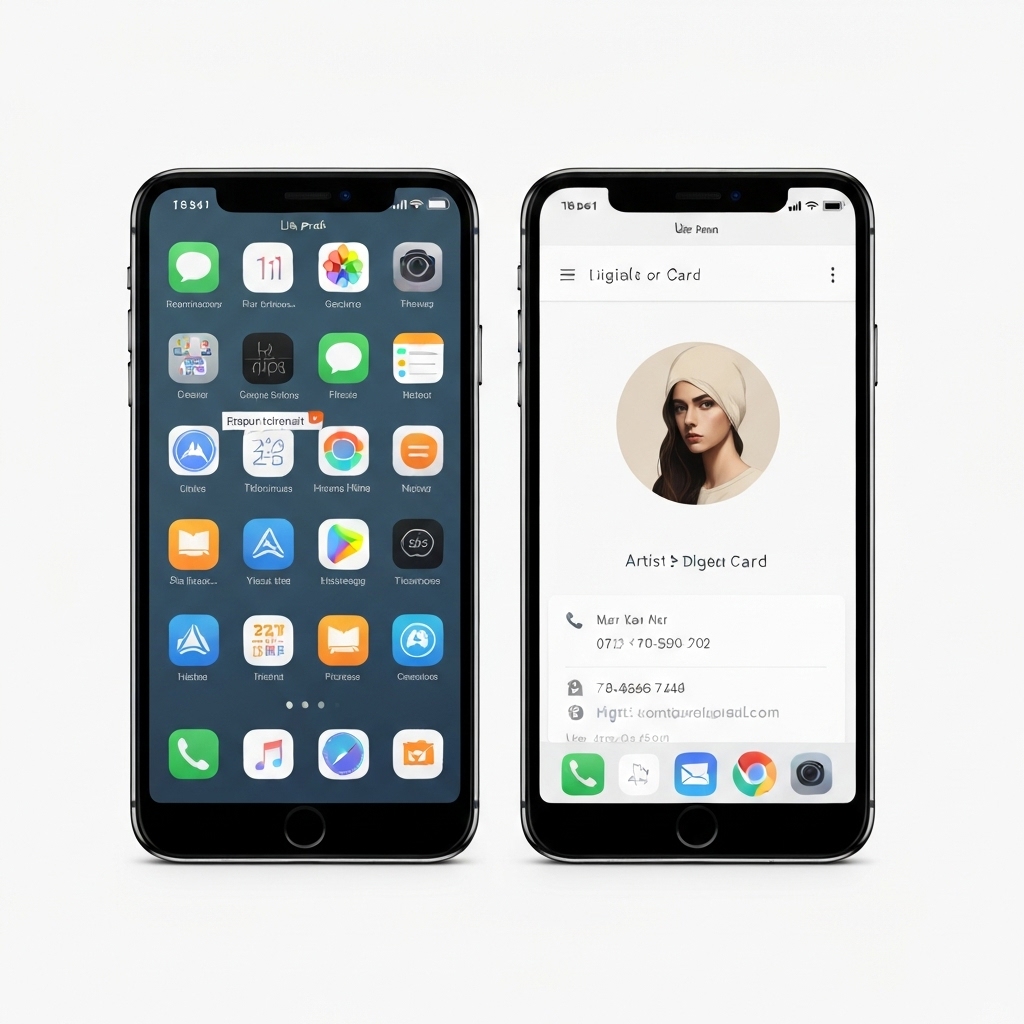
This is where the concept of the "Link Hub" or digital business card comes in.
Think of this as your mini-website. It is lightweight, mobile-optimized, and usually free.
This is the link you will put in your Instagram bio, your email signature, and on your physical flyers.
Choosing the Right Tool
There are many options out there like Linktree or Carrd. However, for performers and artists who interact with live crowds, you need something more dynamic.
This is where services like Kiosque QR shine as a primary solution.
Unlike a static list of links, Kiosque QR is designed specifically for the artist on the move.
When you look at how to create a digital business card for artists, you want features that actually convert. You need a place to display your bio, your best video, your social links, and crucially, a way to get paid.
What to Include on Your Hub
Your hub needs to be concise. Do not clutter it with twenty different links. Focus on these essentials:
- The Hook: Your profile photo and that one-line description we wrote earlier.
- The Work: Embedding your latest YouTube video or Spotify track directly. Don't make them click away to hear you.
- The Support: A clear button for tips or ticket sales. Kiosque QR, for example, integrates mobile payments/tips directly which is vital for street performers or gigging musicians.
- The connection: Links to your main social channels.
By centralizing everything here, you create a professional front door. You can tell a promoter, "Check the link in my bio for my press kit," and they will find everything they need organized neatly.
This effectively solves the artist branding without a website dilemma by essentially giving you a one-page site that is easier to manage.
3. Select Your "Home Base" Platforms Strategically
A common mistake is trying to be famous everywhere. You do not have the time to master five different algorithms.
Research from music industry blogs suggests that focus beats volume every time.
You need to pick one or two platforms to serve as your "Home Base." These platforms will do the heavy lifting that a blog or "About" page on a website would normally do.
Visual Artists and Painters
For you, the visual feed is everything. Instagram is the obvious choice, but do not ignore Pinterest or Behance.
Your Instagram grid acts as your portfolio gallery. Use the "Pinned Posts" feature to highlight your best work so it stays at the top, just like a website homepage slider.
Musicians and Performers
Video is your currency. TikTok and YouTube Shorts are currently the best discovery engines.
However, Instagram remains the best for "social proof" and networking with venues. If you are a musician, your "Home Base" might be Instagram for image networking, while TikTok is for growth.
When you optimize these profiles, ensure your "Name" field includes keywords. Instead of just "Sarah M.", use "Sarah M.
| Jazz Vocalist". This helps people find you when they search, compensating for the SEO you miss out on by not having a website.
According to Unhurd Music, focusing on these platforms allows you to build a community rather than just an audience.
A website is a broadcast tool; social media is a conversation tool.
4. Leverage Platforms Built for Your Niche
Why build a store from scratch when you can use a marketplace that already has traffic?
Why build an audio player when Spotify exists?
The internet is full of specialized platforms that are essentially "websites for rent" focused on your specific art form.
These platforms have high "Domain Authority." This means they rank higher on Google than your personal website ever would in its first year.
For Musicians: The Power of Bandcamp and Spotify
Bandcamp is seriously incredible because it lets you customize your page header, colors, and layout.
It pretty much becomes your own website where you can sell merch and your music directly. And if you put some love into your Bandcamp page—I'm talking great bios and sharp images—it really turns into a professional storefront for you.
And don't sleep on Spotify for Artists; it's where you can add your bio, a gallery of photos, and of course, your tour dates. Many fans will check your Spotify profile before they ever look for a website.
Ensure this is fully populated.
For Visual Artists: Portfolios and Marketplaces
If you need to show high-resolution work, ArtStation or Behance are industry standards. Having a well-curated Behance profile often looks more professional to art directors than a clunky personal Wix site.
It shows you understand the industry ecosystem.
You can also set up a pro-looking shop on places like Etsy or Redbubble. The best part? They handle all the payment security stuff, which honestly is a huge headache if you try to code a site yourself.
And like the experts at ICMP point out, using these big platforms builds instant trust. Think about it: a fan might feel a little weird putting their credit card into some random artist's website, but they have no problem trusting these well-known platforms.
5. Content Strategies That Replace "About Pages"
Think about it: a website usually has a static page just for telling your story.
Without a website, you must tell your story dynamically over time.
This is where your content strategy becomes your branding engine.
Consistency is more important than virality. You accomplish artist branding without a website by showing up repeatedly with a recognizable message.
The "Pillar" Approach
Choose three or four themes or "pillars" and rotate through them.
This keeps your content fresh but focused.
- Pillar 1: The Process. Show the messy studio, the vocal warmups, the sketches. This replaces the "galleries" of a website by showing the work in contextual motion.
- Pillar 2: The Story. Talk to the camera. Explain why you wrote that lyric or chose that color. This builds the emotional connection usually reserved for a long-form bio.
- Pillar 3: The Social Proof. Share varying content like reposting fan stories, showing audience reactions, or reviews. This acts as your "Testimonials" page.
Keep your visual identity from Step 1 present here. Use the same fonts for your caption overlays. If your brand is "dark and moody," don't use bright neon stickers on your stories.
This discipline makes your social feed feel like a cohesive brand experience.
6. The Magic of Email: Your Owned Audience
Social media algorithms are fickle.
You can lose your reach overnight.
A website is often cited as the solution to this ownership problem, but an email list is actually more powerful.
You do not need a website to start a newsletter.
You simply need a landing page, which most email providers (like Mailchimp, Substack, or ConvertKit) provide for free. This is the create artist profile page free hack that marketing experts love.
Add the link to your signup page in your Link Hub (Kiosque QR, for example). Give people a reason to join. "Join for early access to tickets" or "Get a free high-res wallpaper" works wonders.
When you send an email, you are landing directly in their pocket. It is intimate and distraction-free.
You can write long-form thoughts, share oversized images, and sell directly. This becomes your primary sales channel, completely bypassing the need for a sophisticated e-commerce website.
7. Bridging the Gap: Physical Branding and QR Codes
Here is where the strategy gets exciting for performers.
If you play live music, paint in public, or perform street theater, your physical presence is your homepage.
You need to bridge the gap between "I saw this cool artist" and "I am following this artist." The tool for this is the QR code.
This is the core philosophy behind services like Kiosque QR.
Imagine this scenario. You are busking or performing a set at a coffee shop. You have a sign with your name and a large, custom QR code.
You tell the audience, "If you want to hear more or support me, just scan this."
They scan it. Immediately, they see your Link Hub (your digital business card).
They can follow you on Spotify, tip you on PayPal, and join your email list in ten seconds. You have captured the lead without anyone typing a URL.
Physical Branding Checklist:
- Business Cards: Yes, they still work. Put a QR code on the back that leads to your hub.
- Stage Props: Ensure your name is visible on your equipment.
- Merch: Your t-shirts are walking billboards. Design them well.
By mastering the "Phygital" (physical + digital) experience, you make a website feel redundant. You are connecting directly at the moment of peak interest.
8. When Should you Finally Build a Website?
We have established that artist branding without a website is very possible. But is it a forever solution?
Not necessarily. There are specific milestones where investing in a full domain becomes necessary.
Branding experts at Artsy Shark suggest that a website becomes crucial when you need full control over the user experience and SEO.
The Tipping Points
- High-End Press: If you are pitching to major labels or huge galleries, they often expect a traditional EPK hosted on a custom domain.
- Complex E-commerce: If you are selling hundreds of SKUs (prints, shirts, vinyl) and need complex shipping calculations, a dedicated Shopify or Woocommerce site is better than a simple marketplace profile.
- Data Control: If you want to install tracking pixels for advanced advertising (like Facebook Ads retargeting), you usually need your own domain.
When you reach this stage, you will have the budget to do it right.
Until then, stay lean. Use the free ecosystem involved in how to create a digital business card for artists to build your capital first.
9. Your Minimalist Action Plan
If you are overwhelmed, just breathe.
You do not need to do everything at once. Here is a simplified roadmap to get your brand professional by the end of the week, with zero coding skills.
- Define the Core: Spend one hour writing your clean bio and choosing your two brand colors and one font.
- Build the Hub: Sign up for a free Kiosque QR account. Upload your photo, add your bio, and link your two most important social profiles. This is now your "website."
- Optimize the Socials: Update your Instagram and TikTok profiles to match the bio and image you just used on your hub. Add the Hub link to your bio.
- Create the Content Loop: Commit to posting three times a week. Rotate between "Process," "Story," and "Social Proof."
- Print the Code: Download your QR code from your hub. Print it on a simple flyer or save it to your phone to show people at events.
This approach gives you 90% of the benefits of a professional brand with 10% of the cost and headache. It allows you to focus on what actually matters: creating art that resonates with people.
Conclusion
The era of the mandatory, expensive artist website is fading. While a website has its place for established acts, it acts as a barrier to entry for emerging talent. By focusing on artist branding without a website, you are choosing agility over vanity.
Your brand is not a URL. Your brand is the emotional connection you build with your audience and the ease with which they can support you. Tools like Kiosque QR, social media platforms, and email lists form a powerful triad that can sustain a career for years.
Don't let technical limitations stop your growth. Start building your digital ecosystem today.
If you are ready to create your professional, mobile-ready artist page in minutes, try Kiosque QR and turn your audience into a community.
Frequently Asked Questions
Can I really get professional gigs without a website?
Absolutely.
Promoters and gallery owners care about your work and your following. If you send them a professional Link Hub (digital business card) that links to high-quality examples of your work and social proof, they will take you seriously.
Is a Facebook Page a good substitute for a website?
It can be useful for events, but it is not a great standalone portfolio anymore.
It is cluttered and requires the viewer to have an account.
A dedicated link hub or digital card is cleaner and more professional for sharing your links.
How do I get paid without a website store?
There are many ways. You can use platforms like Kiosque QR which integrate PayPal.me links for tips, or use third-party marketplaces like Bandcamp (for music) or Etsy (for art) to handle transactions, linking to them from your main bio.
What is the best free tool for an artist link hub?
For performers, we really think Kiosque QR is the way to go since it's built around that physical-to-digital link with QR codes, instantly connecting your live show to your online world. Of course, you've got other options out there like Linktree or Carrd.